Greece Travel Journal, Part Five
Previous entries in this series:
Prologue/Afterword (15 June)
It’s my last night in Greece. I’m sitting in what’s become my outdoor writing office. For the past few days, we’ve been staying in a beautiful sublet on the sixth story rooftop of an apartment building in an outer part of Athens. Each morning, I’ve woken to beautiful 360 degree views of the city, invigorating breezes, the perfect amount of light, and my gorgeous husband.
It’s my last night in Greece. We leave in the morning for a plane to the Netherlands and then another shorter trip to Luxembourg, back to our home.
I’ve much more to tell you, and I’m barely at the halfway point of these journals, but right now, all I can think of is how endlessly happy I am to be alive, to be where I am, to have been where I’ve been, and to have been with the people I’ve been with.
I am truly a fortunate man.
June 9, part two
It took quite some time to get my travel-worn, work-stressed, and heart-ragged husband into the AirBnB we’d rented for his stay.
Years and years ago, I rented my first sublet in Europe. This was long before a corporation managed to turn what was once a simple and non-lucrative social exchange into a source of deep profit for them and societal chaos for others. Back then, if you wanted to sublet out your apartment, you posted the details and your contact information on a free bulletin board like Craigslist. If you were traveling to a place and wanted to rent someone’s place while they were gone, you browsed through those listings, contacted the person, and handled the arrangement directly.
Rarely was anyone ever making money from sublets. Instead, the asked amounts were usually equal to exactly how much they would have paid for rent during that time. Most people who offered their homes were doing so because they themselves were traveling during that time, and so they’d only asked you to cover their own rent for the time you stayed.
AirBnB destroyed all that. Investors and speculators bought up empty apartments, filled them with cheap furnishings, and then hired management companies to handle the cleaning between renters. The problem became so bad that Berlin (most notably) passed laws to stop the problem. Unfortunately, these laws also made it illegal for the older kind of subletting to occur, as well.
Subletting is a great system, especially if you are a lower-class traveler. Renting someone else’s place means you can cook your own food, greatly reducing the costs of traveling so that it’s possible even on low income. Capitalism has severely fucked this up for everyone, though, and created a special kind of middle-class slumlord.
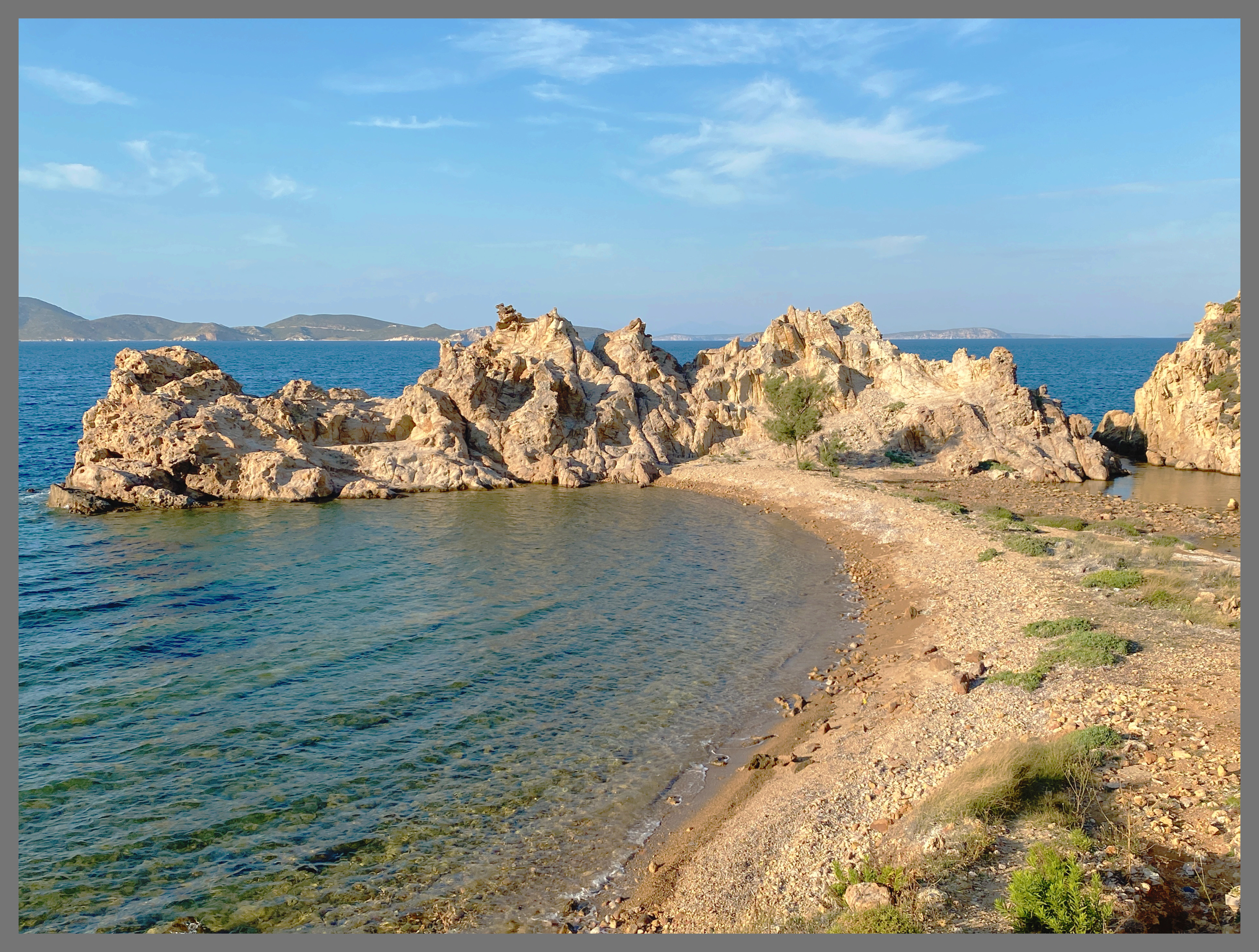
The place I’d gotten for my husband was in a really beautiful location, with two private beaches, but its owner seemed more like this new kind of speculator. I was able to shield him from most of the problems I had with the owner, because he was anyway too stressed to deal with anything more. But besides the delayed check-in, and the owner refusing to alter the reservation (I’d accidentally reserved an extra day), his first attempt to make himself a cup of coffee resulted in a dangerously shattered electric outlet.
Thinking about all these problems after I’d left him there so he could rest and I could return to the Black Elephant events felt really, really heavy. I’d done a lot of work to make his part of the trip as easy as possible, designing his itinerary in the simplest manner possible so he’d not be too stressed when he arrived. Despite all that effort, he really wasn’t in a good shape, and I didn’t know how to help him.
Also, I’d noticed while talking to him that I seemed to be speaking much slower than he was. We felt deeply out of sync, and I worried initially that it was some problem in our relationship, like we couldn’t relate any longer.
Then, another idea occurred to me.
“I feel like I sound a bit stoned or something, like I’m talking slower than you are…”
He nodded. “I was about to say that, yes.”
This made sense. “It’s the island. It has a different time stream here.”
He shrugged. He’s an agnostic, but usually accepts most of my weirdness without blinking. We had discussed this while waiting to get into his place, and had walked to a different cafe from where we started. He chose the table, sitting down next to a group of people who, unbeknownst to him, were friends of mine from Black Elephant, all of whom immediately introduced themselves to him.
“Everyone else sounds a bit stoned like you do,” he said, after they’d left.
“It’s the island,” I said. “You’ll sound like this in a few days, too.”
I thought about this matter the rest of the evening, mentioning it to a few people, including Dougald Hine. He wrote a bit about this, calling it “Island Time,” but also mentioned it could potentially be related to the monastery. I think both answers are probably correct, but this requires some explanation that might reach a little too far past what most readers might consider acceptably strange.
I’ll say at least this much. No matter where I walked on Patmos, I could feel the monastery. It was always there in my senses, even before I’d even seen it, and its oppressive presence felt almost inescapable. And I couldn’t just feel it, but also sensed it in a way that felt like hearing, too.
If you accept the basic premise of most religions, which is also the basic premise of most magic, then you must at least allow for the idea that communication with a divine being has some sort of physical influence. So, it’s not hard to imagine that scores of men praying constantly, at all hours of the day and night, in a religious fortress atop a mountain where once priests and priestesses did something similar, might probably affect the rest of the island and those on it.
If you can accept at least this much, then you might also charitably entertain the possibility that the island’s particular disconnection to other streams of time might be related to all that religious activity. Islands often have their “own” time, but what was happening on Patmos felt more like what I’ve experienced in other places of deific presences. Years ago, I several times attended polytheist conferences (including one I organized), and the strange flows of time in those events had much in common with what was happening on Patmos.
I don’t usually do “protection spells” or similar rituals at home, since I don’t really need them. Once you’re quite rooted in a place, it’s not very easy for any malign influences to bother you, just as a large oak has little reason to care about storms or even lightning strikes. Because I don’t normally do them, I forgot to even think about doing them there on Patmos, until the “loudness” of the monastery became so unbearable that I really needed to. My slumber was constantly disturbed, interrupted by dreams that didn’t feel at all like they were for me.
Once I finally did, this all eased up a bit — but it didn’t disappear. I’ll admit that, despite how utterly wonderful every moment had been with the others, the thought of leaving a few days later felt like a desperately needed relief.
10 June

Patmos, as with many other places in the world, has a dark — but much more mundane — secret. The island cannot support its own permanent population, let alone its tourism industry.
Though quite a bit of food grows on the island, none of it is enough to feed its just under 3,000 year-long residents, and so food must be constantly ferried in. But this isn’t the only way the island is unsustainable. Diesel must be be shipped in constantly to fuel the island’s electricity plant, and that’s not diesel’s only role. Besides the many cars and scooters on the island (very few people seem to walk there), there’s a lot of diesel consumed by the multiple daily ferries transporting the devout and leisure tourists to and from the island.
Diesel also powers the navy ships I saw anchored in the ports, there for a reason that wasn’t at all clear to me until the day I left. They all look the same, so I didn’t realise the one I’d seen this day wasn’t the one from the day before. It was only because of Alfie, the son of Dougald Hine and Anna Björkman, that I learned otherwise. Sitting with them and my husband at lunch after Martin Shaw’s final storytelling session, one of us mentioned the navy ship, and I said, “it’s been here all week.”
Dougald shook his head. “Today’s is different from yesterday’s. Alfie noticed the numbers on the ship are different.”
This made the ship’s presence even more strange, but I didn’t find out what they were there until my friend, Jeff Key, solved the mystery for me. He’s one of those rare people who can talk to absolutely anyone: it’s almost as if people lose all their social awkwardness and fears about speaking to strangers around him, as several of the Greek sailors ended up doing.
“The ships are full of water. There’s not enough on the island, so they have to transport it in from elsewhere.”

I learned more from a taxi driver in Rhodes a few days later, after asking him about the water situation in the islands. Most taxi drivers in the Dodecanese have a second job during the off-season; his job is to install and repair residential internet throughout the islands, meaning he’s gotten to know them all quite well.
I asked him about the water and electricity situation, and he sighed. “There’s not even enough electricity for the desalination plants, and no one wants wind turbines or solar panels because they think it will ruin the views.”
The heavy reliance on petroleum for survival in the Dodecanese islands is hardly a rare situation. None of the things we identify as “modern” or “civilized” can currently exist without fossil fuels, including our political regimes and certainties. This is the point Dipesh Chakrabarty made when he wrote in his essay, “The Climate of History:”
“The mansion of modern freedoms stands on an ever-expanding base of fossil fuel use.”
Suggesting that humans might do best living within our limits and putting curbs on economic activities (tourism, for example, and extractive industries) would seem a relatively rational opinion for someone to hold. We might even call this position humanitarian, since the results of over-extraction — thirst, hunger, pollution, poverty — often first harm those who had very little role or benefit in the over-extraction in the first place.
Unfortunately, at best such suggestions are met with accusations and suspicions. Our utter dependence on fossil fuels to power modern civilization is coupled to a belief that everything it powers is a societal good; critiquing this whole arrangement, then, appears to true believers as an attempt to take away the good, and even to introduce evil in its place.
While a pagan/animist worldview is hardly the only one to assert that such natural limits matter, this belief is a core feature of these worldviews. Within a cosmology in which nature is full of gods, and that things such as forests, rivers, and mountains are also gods, taking so much that it harms those gods can only result in suffering for the humans who live in relationship with them.
In animist and pagan worldviews, the spirits of the forest and the forest itself are inseparable things. In such cosmologies, to take from a forest one must negotiate with the forest as one negotiates with another person who possesses its own desires, needs, and demands. On the other hand, monotheism, especially its Christian and Islamic iterations, cut out all these intermediaries, promising humans they can negotiate only with nature’s supposed creator directly. And of course, that creator supposedly made it all for humanity’s benefit and his own glory, so we (or at least his self-appointed chosen) are already empowered to take as much as desired.
This point is what I was happy I would get to offer during the afternoon HOME session, sitting alongside Elizabeth Oldfield, Vanessa Chamberlain, Dougald Hine, and a thinker I’d found quite interesting, Mohamed Amer Meziane. The topic was “the secularocene,” a theory suggested by Meziane as a more accurate framing of the problem of climate change. Basically (and a bit too simply) stated, he points to European (specifically, French) secularism as a foundation of the extractivist worldview which justified the exploitation of peoples (through colonialism) and fossil fuels. Thus, for him, our current climate and environmental problems come down to a European-Christian belief that heaven can be manifested on earth.
I was quite looking forward to meeting him. We’d been on a virtual Black Elephant parade together, though when I re-introduced myself he’d insisted we’d never met and I was mistaken. This felt a little weird, but I suspected he was merely tired from his journey and not yet settled. He’d only arrived that day, and so hadn’t been part of any previous events.
I think, in retrospect, the planned discussion wasn’t really ideal for the setting. The week had been all about feelings, emotions, vulnerability, and forging connections across very different world views and life situations. This, on the other hand, was about thoughts and religion, the latter being an ever-present theme which no one addressed directly.
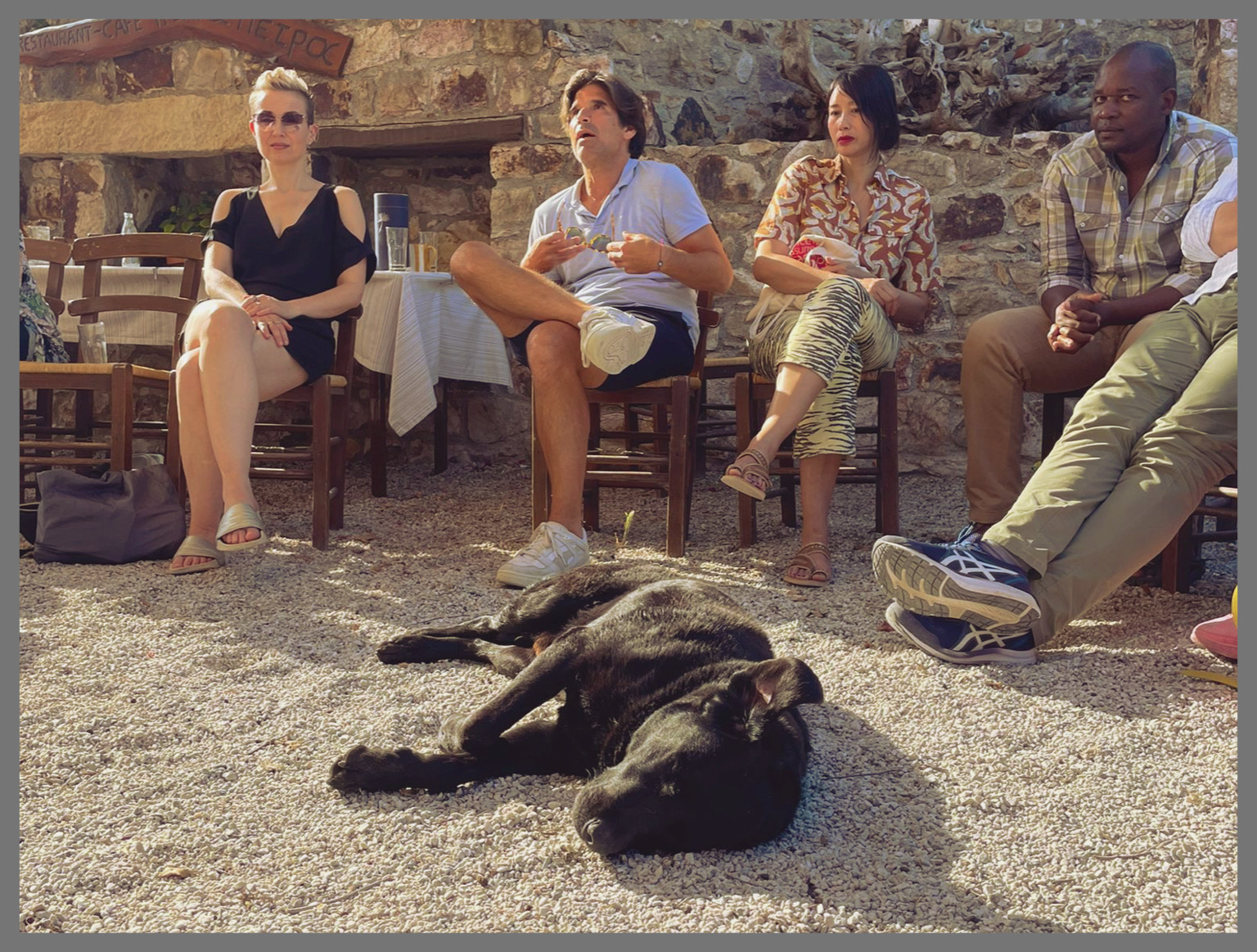
Meziane spoke for close to thirty minutes, and then Elizabeth, Vanessa, and I each spoke for about five minutes about our way of understanding this current problem. It all was quite interesting, though again perhaps a bit more cerebral for the week’s themes. One person in the larger circle mentioned that the emotional intelligence we’d all focused on cultivating seemed a bit absent, but thanks to something Meziane said after this, the emotions came back quite quick.
My husband has never seen me angry. Actually, almost no one has, until this day.
I’ve thought a lot on why I don’t let others see me angry. My father certainly has something to do with this. Watching his inability to deal with his anger, and being on the receptive end of his abrupt explosions of inexplicable rage made me want to learn never to be like that. Also, being the emotional and sometimes physical punching bag for others — partners, friends, activists, homeless clients, strangers — taught me that anger is best shown very, very rarely. Too many rely on others to clean up the damage anger causes, and too many are guided by it.
But though very few people have ever seen me express anger, that doesn’t mean I don’t get angry. In fact, there have been many moments where I’ve found fury and rage sweep through me. The last time was this past winter, in a forest near my home, not far from the place that is my grove. A hunter had set up a salt block atop a pole high enough that deer would need to stretch their necks to lick it. Out of their sight, the hunter had also set up a tall hunting blind, situated so that he’d have a ridiculously easy direct shot to kill the deer he was baiting.
That enraged me, and it was a delicious, divine rage. Anger is a beautiful thing, and it was a beautiful, joyous feeling to destroy the hunter’s illegal trap with Diana’s name on my lips. Such things are what I feel anger is for, a kind and important impulse that guides if we listen to what it teaches.
After the circle of about twenty-four people finished voicing their reflections on what we’d said, Meziane spoke again. He’d been taking notes on everyone else’s statements, a thing one might do in an academic debate rather than in this kind of discussion. It felt more like he was trying to defend a PhD dissertation, and he spent quite some time criticizing my views on monotheism’s relationship to the de-sacralization of the world. He then repeated some very tired neoliberal ideas about the relationship of Hindutva to Hinduism in India, before stating:
“… and we have seen that paganism and animism can lead to eco-fascism.”
Longtime readers will already know why that would have made me furious, as it’s precisely the capitalist-neoliberal smear against anyone — including indigenous peoples — who argue for de-growth, respect for natural limits, and re-establishment of reciprocal relationship between humans and other-than-humans. It was first a disciple of Murray Bookchin who created this idea, re-narrating the hyper-industrial and hyper-modern war machine of the Nazi regime as a mythic anti-modern environmentalism. Right-wing anti-environmentalists and “scientific socialist” leftists (the Luxury Space Communism sorts) both use the term as a smear against ecological critiques of modern industrial capitalism. I’ve also heard Dark Mountain described as “eco-fascist,” as well as Greta Thunberg, Extinction Rebellion, anti-fracking protests, indigenous rights groups. Also, John Michael Greer’s been called an eco-fascist, as has Paul Kingsnorth, and so have I.
Hearing that word associated with animism in particular was quite infuriating, as was the matter-of-fact way he asserted this smear into a group who’d worked for days learning to understand each other’s beliefs without judgment.
“I’m done,” I said to him, a bit loudly. And then stood up and walked away.
Standing on the beach away from the group, staring at the bay and another of those water-transports, and then glancing at the rock where veneration to Aphrodite had occurred before being snuffed out, I found myself smiling. Felix had then come to give me a hug, telling me how he’d quite understood my reaction. “That would have been hard to listen to,” he said.
“It was,” I said, breathing deeply. “I’ll come back in a few minutes.”
As I looked out again over the water, I realized this was the first time I’d shown anger in front of others for many, many, many years. More so, it was the first time it felt “safe” to show that anger to others, amongst companions whom I understood wouldn’t mistake it for hatred.
I eventually returned to the group, and though I’d thought to remain silent (he was still talking), he mentioned my name (incorrectly — he called me Rhys), and I interjected.
“I’d like to tell you why I got angry. You said something quite untrue about animism and fascism, and I hadn’t expected to hear that here.”
I should have suspected he’d wanted to argue more about this, and this really wasn’t the place for it. And that’s what happened, which really made for an unpleasant time.
When the meeting finally ended, he insisted we talk more immediately about it, though I’d asked him to give me some time first. It was a frustrating conversation, the kind you get in radical groups that lead absolutely nowhere. I’d hoped just to go be with my husband, who was joining us for the final evening’s dinner, but I tried to be charitable with him.
In fact, I also found I rather liked the guy, and remembered a bit what it once was like for me. Feeling the need to prove and defend your theories to others isn’t a fun position to be in for long, and this sort of thing embitters you eventually. Especially when you’re too often in your mind — a problem from which every academic suffers — it becomes very difficult to distinguish who you are from what you think. You start to see competing ideas as aggressions, not as mere difference, and it’s really, really hard to come down from such positions.
“Hey,” I said, eager to end the conversation but also wanting to make sure he didn’t feel defeated. “You got here late and didn’t get the experiences we all did. If you had, that conversation would have gone quite differently, and you probably wouldn’t have said what you did. Just know that what you said is exactly the same as the false statement, ‘Islam can lead to Islamofascism.’ Go have fun.”
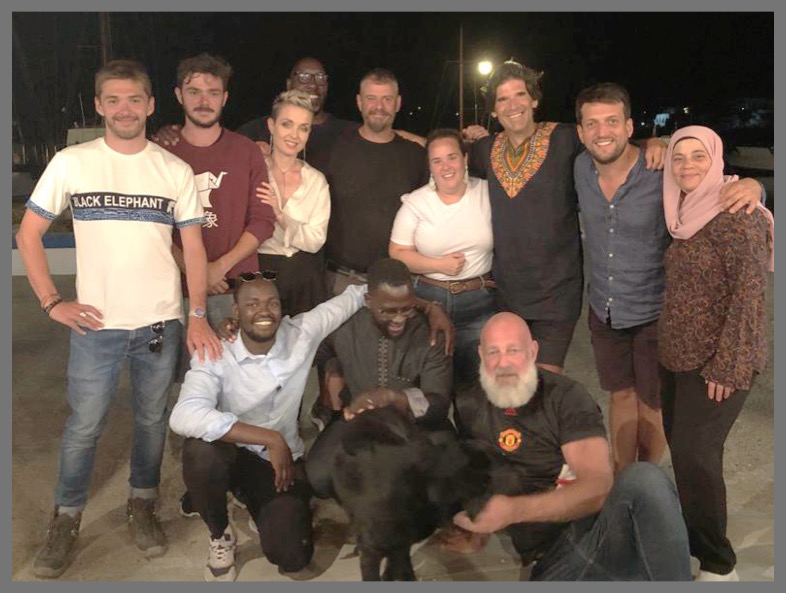
The rest of the evening was quite beautiful. It was the last night of Black Elephant, and the interactions felt more profound, more intimate, more delicious. I’d worried about how well my husband might integrate into the conversations; I needn’t have had, since he was delighted. We sat with the Iceland trio, and Dougald, Anna, and Alfie, and with Tola, one of the core organizers and the kindest man you’ve ever met.
After dinner, as formal good-byes were said and pictures were taken, nothing felt bitter-sweet, only sweet. Again, like long summer nights in walled Andalusian gardens, kindness and laughter and poetry wafting ever outwards, like prayers to our many gods.
 Rhyd Wildermuth
Leave a comment