When justice became social instead of economic, when the personal became political, we lost the ability to let parts of life just be.
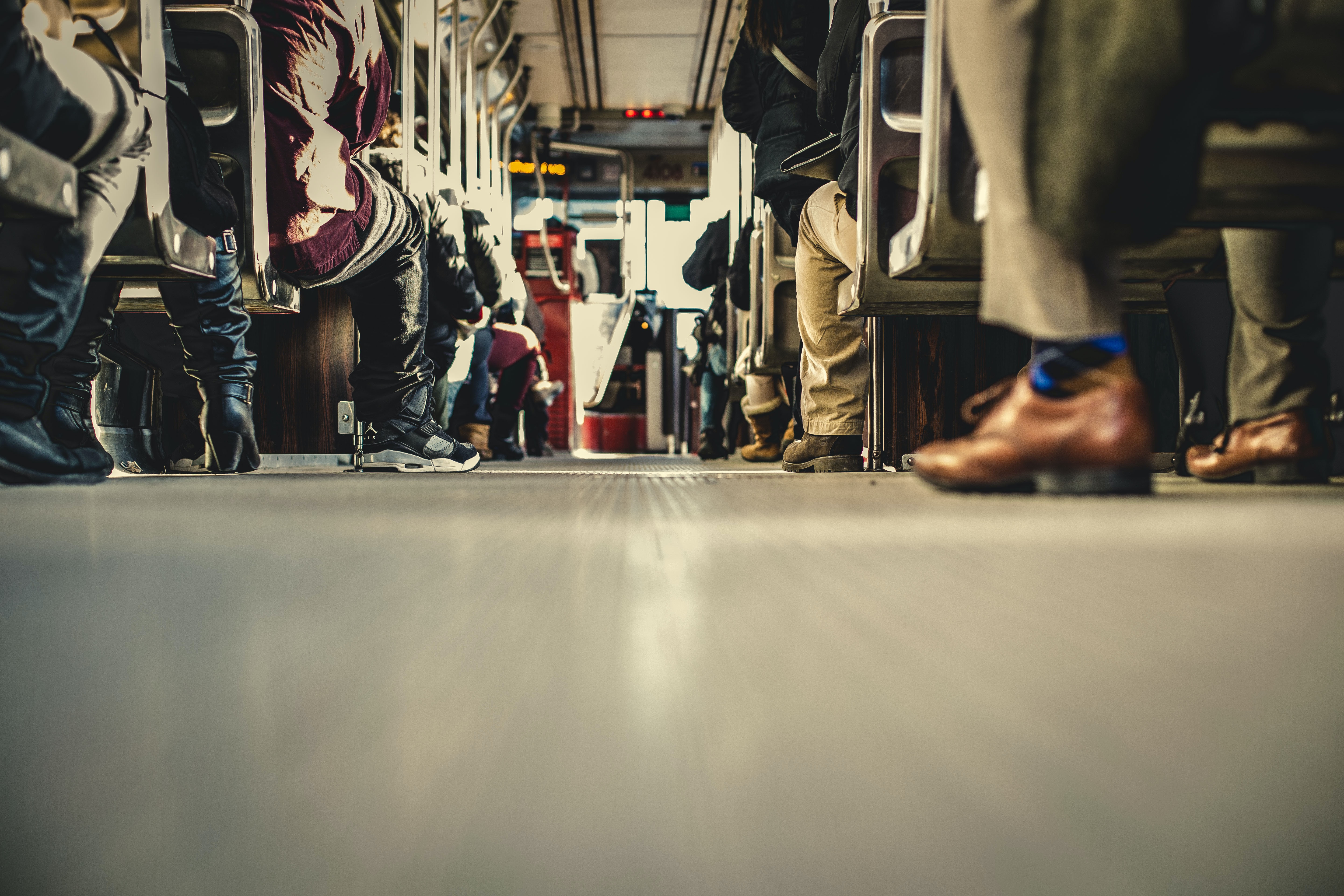
The other day, on the bus, I sat behind a young family and their two very loud children. The parents were playing with them, laughing as the kids laughed. That laughter then encouraged the children to laugh louder, and then to scream in delight.
Together, the four of them made enough noise to fill a small playground.
It was evening, and the bus was full of people going home from work. The woman next to me, not much older than the young parents, looked quite unhappy about all this. She kept pushing her earphones further into her ears and pressing herself against the window, as if to somehow escape the din.
Close on to the twentieth minute of the bus ride, the woman next to me finally lost her temper. Snarling in French loud enough for the entire bus to hear, she said, “you are bad parents to let your children disturb everyone like this. You’re not the only people on this bus.”
Predictably, the mother of the children became quite offended. The rest of the passengers shifted in their seats, awaiting her response. She said nothing, though. Instead, she merely cast a “fuck you” glance at her critic, and then continued playing with the children.

I guess we’ve all been in such situations, especially in public transit. Those children were really quite loud. Their parents were clearly indifferent to the unspoken social norms that insist others shouldn’t be subjected to such noise. The children, on the other hand, were oblivious to the displeasure of the other passengers, caught up in their relentless play. And, of course, many of the passengers on the bus were quite tired from their work days and likely quite disturbed by the children’s explosions of screaming laughter.
Time was, I’d be quite annoyed by such noise, too. I can readily remember all those who once irked me: the loud person on a phone, practically shouting a conversation that could quite clearly have waited until after the bus ride; the teenagers listening to music without headphones, insisting all the world experience their poor music tastes; the couple arguing with each other, the rest of the bus as witness to their relationship problems.
It’s been years since such things bothered me, though, and I’ve not really thought much about why that change came about. Perhaps years living with my husband has something to do with this. Whenever he’s feeling particularly sad or particularly inspired, he’ll play opera as loud as is humanly bearable, on repeat, until he feels better. Loving a man who does that kind of thing definitely teaches tolerance for noise.
Maybe also it’s my otherwise very quiet life. I work at home alone, and rarely see others except for trips to the gym, or for groceries, or when my husband returns from work. I’m surrounded by pastures and forests and very few people, so human noise is really quite rare for me. And anyway, I’m known to squawk back at my neighbor’s geese and to moo back at the cows behind my house; perhaps I’ve now a different idea of communication.
I think it’s something even more than that, though. I was sitting just behind those really loud children, and was also a bit tired. Still, at no point did I find their noise worth more than my passing attention, no more than the attention I gave to the stress of the woman next to me, her irritation building to rage. It seemed quite inevitable she’d soon explode and say something quite mean, but this was none my concern.
If I needed to explain my reaction, which was really a non-reaction, I’d say that everything happening in that moment was what just is. The children being loud, the parents encouraging their play, the irritated passengers, me, the bus itself, the roads along which it drove: everything was what just is, and that was all.
Everything was happening, going about its own existence in a complicated dance with the existence of everything else. Children were playing, their loudness bothered others, a woman reacted, another woman responded, and life continued just as it always does.
I’ve long been fascinated by an insight from Giorgio Agamben in his book, Homo Sacer. Towards the end of it, he asserts that we no longer have a sense of non-political life, of being outside the realm of the civil and of society:
Every attempt to rethink the political space of the West must begin with the clear awareness that we no longer know anything of the classical distinction between zoe and bios, between private life and political existence, between man as a simple living being at home in the house and man’s political existence in the city.
For Agamben, the political has essentially colonized our understanding of ourselves, such that we also politicize everything. Writing about his observation in Here Be Monsters, I described what this looks like for us now:
Agamben’s observations about the political having captured all of life seem to give a shadow meaning to the feminist slogan “The personal is political,” pointing to a general tendency we see in radical thought (particularly online) to define every identity as a matter of politics.
One incident from a few years ago in the United States will illustrate what I mean. For a little while, the very expensive grocery store Whole Foods sold pre-peeled oranges in plastic containers. When news of this product became widespread, there was a maddening debate about it: on one side were those who saw it as ridiculous and hyper-capitalist; on the other side were those who insisted that critics of the pre-peeled oranges were ableist. The latter group asserted that since a disabled person who might not be able to peel an orange on their own would benefit from the product Whole Foods was selling, those who thought it was wasteful were against disabled people.
The curious fact that an orange could become a terrain of political struggle and conflict demonstrates what Agamben meant. In a way, we might say that the political has colonized every part of our life: our thoughts, our belief systems, our perceptions, and even what we eat. It is as if there is no “outside” any longer, no realm beyond the reach of the polis where wolves roam and political ideas have no power.
That pre-peeled orange debacle took up quite a lot of people’s mental space for several months, because it was happening at a peculiar time in the United States. The incident came to everyone’s notice in March of 2016, during the heady and contentious days of the US presidential primaries and the constant social media circus leading up to the election.
Back then, I remember noticing a really strange shift in the way we all thought about things. Not only was everything political, but it seemed you could immediately find an essay (or six) on why anything you thought, were, did, said, or felt was oppressive to someone else.
These were the heydays of sites like Everyday Feminism and The Establishment, which pumped out daily viral posts explaining how “Your Hatred of Comic Sans is Ableist,” how telling people you are on a diet is oppressive to people who aren’t, and how using the word “narcissist” was harmful to actual narcissists.

Not only was everything oppressive, but each oppressive thing you liked, did, thought, or believed was also part of larger systems of oppression. More so: merely knowing such things were oppressive and then no longer doing them wasn’t enough. You also needed to call out the oppressive behavior of others, to actively challenge, criticize, and shame those who were being oppressive.
That’s when it was decided that everything you did and also everything you didn’t do was political. You were always taking a side in a life-or-death struggle whether you knew it or not, and anyone who did not yet realize they were a combatant — or worse, denied they were — was kept ignorant by their “privilege.”
Accusations of privilege escalated quite rapidly, and it seemed a new form of privilege was “discovered” weekly. There was of course white privilege, and male privilege, but then there was also light-skin privilege, skinny privilege, and cis-privilege. You could be privileged for not being disabled, for not having children, for having children, for going to university, for not going to university (because you had no student loan debt), for passing as the other sex as a trans person, for being “straight-passing” as a gay or a lesbian, for having a car, for not having a car, for living in an apartment in the city, for living in a house in the suburbs. Everything someone else had or was that another person didn’t or wasn’t was a matter of privilege, and privilege needed to be called out whenever it was identified.
We’d gone very far from the original meaning of the word. Privilege is formed from two Latin roots: privus and lex. That second word, lex, meant “law,” but more interesting is the first root, which meant “individual” or “self,” and it’s the same root of the word “private.”
To understand the earliest sense of privilege, it’s helpful to look at what “private” originally meant. Something that was private was set aside or set apart (just like “sacred” meant “set apart”) from the public realm. The private was all those things excluded or exempted from the use of the public and the authority of the republic. Private property, private actions, and private beliefs belonged to the individual, and it was understood that the public had no say in these matters.
A privilege was an expansion of the private. Privilege was a law exempting an individual from another law or from certain public concerns. It gave the person more autonomy, and a privilege could equally be extended to people of great status or to people with disabilities. For instance, a privilege might exempt a person from military service because he was an merchant or because he was crippled. 1
This brings us back to Agamben’s observation that we no longer have a sense of the difference between private and political existence, “between man as a simple living being at home in the house and man’s political existence in the city.”
Very little of our life is set apart from the reach of the political realm, and even less of it now that we’re all carrying around electronic tracking devices in our pockets. We speak our intimate thoughts on social networks, broadcast photographic documentation of our daily activities, and live our lives as if we’re the primary actors in reality shows we desperately hope others are watching.
But just as much as we have no sense of the private any longer, we also have no sense of political existence, either. We’ve blurred them together, such that we imagine the food people consume, the shows people watch, and the way people raise children are political. For many, such private matters are re-narrated as key parts of radical political programs, acts which signal our allegiance to progressive values or our active rejection of them.
That’s how a pre-peeled orange became mistaken for a terrain of political struggle, rather than just a matter of an over-priced product for sale at an over-priced grocery store. The private decisions of people to buy or not to buy such a thing, as well as their personal opinions regarding its very existence, became for too many a sign that either half the world was crazy or half the world wanted disabled people to starve to death.
More recently, the matter of vaccine mandates and masking took on the same gravity for many, even up to the present. Choosing to wear a mask became a sign for some that the mask wearer was a compliant sheep. Choosing not to wear a mask became a sign for others that the unmasked person was a murderous fascist who wanted all disabled people dead. No matter the reasons for any individual’s privately-made decision, it was automatically assumed to have been a political decision with political consequences.
While for some, the act of wearing or not wearing a mask might have been for them an act of protest or a sign of allegiance to a particular political ideology, I think most people didn’t really think about their decision at all. I wore masks when others asked me to, or when there was threat of an extreme penalty for not doing so, but I didn’t really dwell on the matter. I didn’t wear a mask in places where it was officially required if others were not wearing them, or in the strange moments when masking was required on one part of a train journey but not on another part, despite it being the very same train. Once the laws went away, so did my mask; seeing the very rare person here still wearing one, though, means nothing to me one way or another.2
In fact, I felt about masking the same way I felt about the loud children and the angry woman on the bus. Neither their laughter nor her derangement were anything more than what just is. There was no side to take between them, nor any political analysis to craft. Sure, one could definitely have done such a thing. Maybe the woman was neurodivergent and thus possibly over-affected by loud sounds. Or maybe she was showing her “childless privilege.” Maybe the parents of those children were poor, or maybe they were enforcing “cisheteronormativity” on the rest of us. Maybe the woman intends to vote for the far-right ADR party in the upcoming elections, or maybe the parents do. Maybe the children were autistic, or identify as trans, or maybe the woman is non-binary and I’ve been getting her pronouns wrong this entire essay.
But why would we do any of this, or feel the need to? Why weigh such matters at all, as if we were appointed judges tasked with deciding the goodness and rightness of every stranger we encounter?
That’s the situation we’re in, though. When justice became social instead of economic, when the personal became political, we lost the ability to let parts of life just be. We forgot how to exempt aspects of ourselves from the political realm, and then we cultivated an insatiable resentment for the “privilege” of others.
Agamben’s lament includes two Greek words that both mean “life”: zoe and bios. Zoe is the life of the body, “bare life,” or raw, animal life, and it’s the life lived in private. Bios, on the other hand, is all the aspects of life that can be changed, transformed, shaped, or restrained by politics, religion or ideology. Bios is the aspect of life the state controls or governs, the “public” or “political” life that is always expanding, claiming more and more of our existence.
Zoe, the life lived outside the political, is the life of what just is. It’s humanity without the grand narratives, social interactions without diagrammed oppression hierarchies. It’s not life without strife, of course: loud children and tired people are a fact of nature, because children are sometimes loud and people are sometimes tired. Instead, it’s life that doesn’t need to be categorized, politicized, or explained. It’s what just is, and it’s what we most need now.
It was only much later, by way of French, that privilege came to also mean “preferential treatment,” so that you could experience privilege or benefit from it, rather than merely be excluded from a specific legal regime.
I’m a bit less indifferent to the strange American trend of radical spaces declaring their continued allegiance to masking as a political act.
 Rhyd Wildermuth
Leave a comment