
Do not be pressed into fear
By the pushing of spears.
–Lorna Smithers, The Bull of Conflict
I.
“People cannot rule themselves. They need someone to tell them what to do. They’re too stupid.”
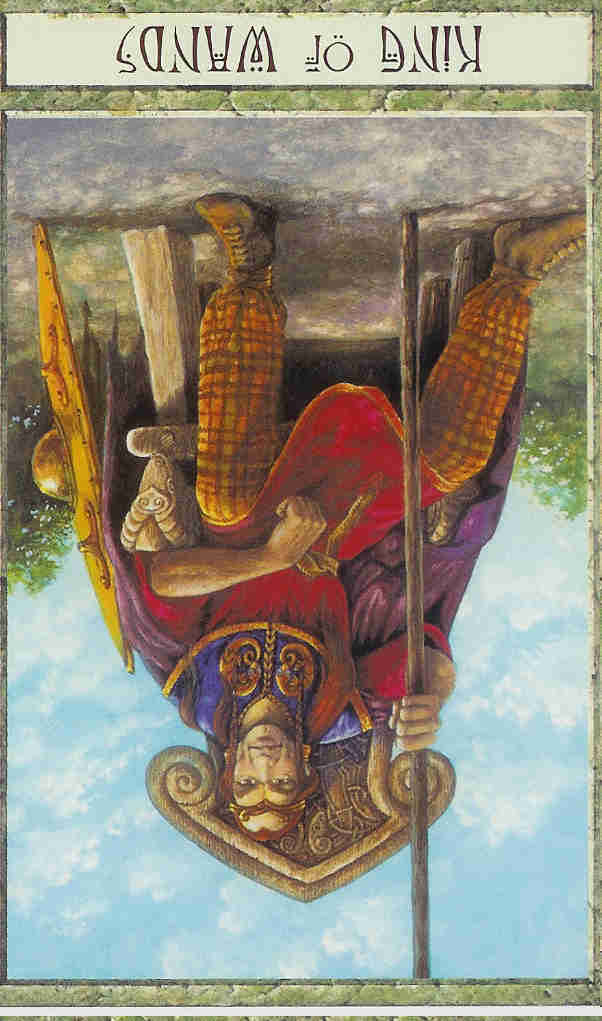
Crimson and night the colors about me as I speak to the king. I can see his staff, his scepter a bit too heavy, tilted in his hand, weighted like a mace, weighted like his words.
I cannot believe the words I’m hearing. They do not fit the demeanor of the regent, the lauded generosity, even his self-stated Anarchism.
I want to challenge him, but I’m losing my nerve, my arm tired from the blows, my mind spinning, my eyes darting about for an ally.
But I’m here alone, sitting before a vision of seductive human power while he details a glorious vision of the future, and we’re at war.
It’s funny, you know. I’m no warrior. I’m not even all that serious, even when a cop is bashing my head against the hood of a police car. I make jokes, I jeer and act ridiculous because the world’s all too serious. I prefer tea over whiskey, like I’m an old British woman with her doilies.
I’m no warrior, though I’m sitting amongst them, people I admire, respect, perhaps even crush upon. I walked in with a priestess of battle talking of warrior dead and Alder shields; I, myself, am devoted to a warrior-king-god and the raging giants of land who hold his flesh, but I’m only a bard.
A bard who’d fight to the death to end Capitalism, sure, but I’d rather weave its end with my words, not the sword or the coin.
I’m here, guest of warriors, wilting under the dazzling vision of an intoxicating future, wishing I’d more tea in my cup or that another would extricate me from this battle. Not quite cowardice–I could have fled a bit ago, cited discomfort or some false errand. I’d been fighting the urge to say “you scare me,” despite how frightful I found the tilting king.
II.
He’s berating me, suddenly, and very well, almost with my own voice.
“Why didn’t you bother to educate yourself?”
Why’d he ask me if I had a Master’s degree or just a Bachelor’s? Why I’d answer? I’m usually much better with these conversations, but I’m off-balanced, tripping over my own words.
I’d tried to explain what my time in social work had taught me about non-profits, re-hashing the argument I’d proffered before.
“So you have a Masters in Social Work, or…?”
Neither, I say. I didn’t finish college, an odd wound suddenly re-opened. And suddenly I have nothing to say, all my words invalidated, just as he notes my age and sagely advises me I’m not old enough to understand. I try to explain I have educated myself, how I’d read every book on economics, and politics, Lacanian psychoanalysis and Critical Theory, Zizek and Baudriallard —
“But you’re not educated. You never bothered, why?”
This was going poorly. My eyes dart around the room, trying to find solace, to ignore the insult. Suddenly I’m telling him about my poverty, and the Christian college I had to leave, and–
“How old are you?” He asks, and again I confess my faults.
“Ah,” he says, pouncing. “You’re at an earlier cycle; you can’t see the truth I see. When you reach my age, you see what needs to be done.”
Why’s an anarchist Bard wilting at such talk? I weave meaning, but I am here de-meaned, belittled, berated, an adolescent before an Adult, an Authority, one who knows, one who knows that he knows.
I keep looking around to see if others are noting this conversation, the artfully-woven insults, my awkward poise, wishing for interruption.
But I know better–I need to endure this, I need to hear these words myself. And it was I who’d challenged him in the first place; not personally, of course, as I knew him only as a Name, branded-large like others but without the cult status. He’s not a celebrity, not the head of a gay-witch triad with product lines or 30 books to his name. Head of a mage-order, sure, and his magic screams through every artful word, but even that order’s no empire.
This man’s brilliant, you can tell. Likable, too, charming without being cloying. And he’s actually trying to build something, something most don’t ever bother to do. And not just build something, but build something useful, something everyone could benefit from, not just those who can buy-in, pay for the retreats or the seminars, take the five-year courses and attend the parties.
So why the fuck are we fighting?
III.
I came to this Pagan thing late, I guess, though I’ve been a ‘cultural’ Pagan for most of my adulthood. I had all these ideas about what it meant, what others probably did and believed, what sorts of rituals go on when most aren’t looking, and particularly, what sorts of stances most Pagans held about the world around them.
It’s enlightening to hear the surprise of others when I try to explain what I’m on about and what sorts of things I say make others angry. I usually smile and sigh when they say, ‘but I thought you were all polytheists,’ or ‘wait–there are racist Pagans? How?’
It’s the same surprise we all have at some point. I spoke to a new friend about this under a tree outside Pantheacon–his own friends were surprised to hear we’re not all vegetarians. Another friend heard for the first time that some of us believe all the gods are part of one god. Judging from the flippant laughter amongst those waiting to enter a ritual for The Morrigan and the shocked, somber exit afterward, I suspect many Pagans suddenly discovered that gods actually exist.
But anyone can call themselves a Pagan, just as any can call themselves a Queer or an Anarchist. I wield all three, though I know they’re just words, meaningful in some contexts, enraging in others, meaningless otherwise.
Wiccans rightly rage that the traditions and lineages they’ve nurtured now can mean anything one likes. I can declare myself a Wiccan High Priest after reading a book. I can claim to be a Shaman and charge money to teach enlightenment without ever having seen the spirit world. To back up my story I could list years of training, anonymous teachers and secret lineages and, with enough magic (usually just an advertizing budget) and enough followers, I can become invincible, a king amongst earnest peasants.
‘Pagan’ is a word so large to encompass the world if it so chose. There’ve been efforts (rightly fought) to describe indigenous religions as Pagan, to re-inscribe Hindu and African-Animist beliefs as the same thing that’s being done in the West. It’s a beautiful idea, a grand vision, but frightful and wrong because of who’s doing the naming. Whites, mostly men, with some western education and the benefits of modern security and ease may correctly identify correlations and similarities, but like Crowley and Gardner, their own colonialism is invisible.
It’s not we who get to name what they do. To identify with the oppressed, we must become the oppressed and relinquish what makes us oppressive. I’m a gay white man living in a highly-developed American city; I do not know the oppression of a woman on the floor of a textile mill in Cambodia after sacred spirits her people worshiped were uprooted. Not only do I not know her oppression, I sustain it with my need for clothes and my failure thus far to destroy the system which profits her owner.
Pagans seem natural allies with such folks; we want the forests, we want the traditions, we want the breathing ancestors and the singing spirits, the gods and ancients weaving throughout our lives and communities. I’d thought that was what Paganism meant, long before I met other Pagans. I hadn’t yet seen the rows of books published from re-formulated indigenous knowledge; I hadn’t yet read the screeds against Social Workers with Pentacles or the tepid non-responses to the war against Black folk in our streets.
I didn’t yet know that Pagan can mean whatever one wants it to mean.
IV.
How much have the elders sold us out, genuflecting to the academy, the establishment, the tabloid press. In return for this bargain we have gained precisely nothing. The supposed freedoms we have been granted are empty. Late capitalist culture simply does not care what our fantasy dress up life is like as long as we work our zero hour contracts, carry our mobile phones and keep consuming.
I’m wilting under the assault of his words, this brilliant man chastising me for my failure to learn, my churlish attempts to critique his grand vision.
“You’ve read Peter Grey’s Rewilding Witchcraft, yeah?” I ask, hoping for a shared reference.
He laughed, muttered something about nonsense. “No–why don’t you summarize it for me?”
And suddenly I’m trying to form words quickly, like a bad student scribbling a book review an hour before class. “Uh–” I said, feeling the fool. “Look–the point’s about…about how Pagan elders have–wait, no. He’s writing about how we’ve sold out, decided it’s better to have pentacles on headstones then an end to imperialist wars, to have our nice things instead of a surviving planet, how we’ve dulled–”
“Not everyone wants the wars,” he said, and I agreed, and eased, but then I lost the thread.
“In 25 years, only Corporations will have any power or say. They’re golems, indestructible–
“I liked that article!” I interrupted, because I did, and I’d rather be friends. But I’d also thought he’d missed the point, but it was a great start.
“It’s true. This is all about power, which is why everything about privilege and other nonsense you hear in social justice circles is wrong.”
I was about to choke on his words even as I watched the mortified eyes of a woman glare at whatever fragments she’d just caught. Her face was unreadable, but I could not imagine she was pleased.
There’s almost a point there, which is most frightening. Privilege describes a power-relation, but I’ve seen it abused to mean whatever one wants. I’ve heard folks speak of “disabled privilege” and “minority privilege” with straight faces and no irony. I’ve read a lot of New-Right writers; I fear their influence upon intellectuals in Paganism more than that of the Archetypalists. They, more than anyone, threaten to re-form our beliefs into outright, powerful, and true hatred, and they say the exact same thing–it is power which matters.
He’s right, and they’re right, but they’re both quite wrong, but that was hardly the place to explain this and besides–I’m elsewhere.
Water’s lapping at my feet in the mist, clear snow melted with rain soaking my boots. He’s talking elsewhere, haranguing my foolishness amongst the black and red tapestries as I listen.
It’s raining, but I’m not wet, and there are giants amongst me, and I am taller, made of stone, forged from rocks and streams. I am not here, and I am also here, and I’m thinking of Alder, of fallen kings and undefeated mountains.
“We need power, and for that we need money. And then we’ll found institutions, a legislative body, a–“
“That’s terrifying,” I all but shout. A Legislative body? To make rules for Pagans?
And yet fuck is this vision intoxicating, almost as strong as the place my soul re-visited.
V.
I could almost advocate for his vision of a future better than he can.
Last year, a Pagan leader named Kenny Klein was arrested for possession of child pornography; after his arrest, the internet flooded with accounts of people who’d endure abuse by him, and one was left to wonder why no-one had acted before. With a grand Pagan council, perhaps he would have been stopped earlier.
Multiple witches have been shown to have plagiarized other sources, selling spiritual knowledge as completely their own. If you count up the number of years certain Brand-Named Pagans claim to have studied under mysterious teachers, you find a lot of people who apparently initiated at 6 years of age. And speaking of early initiations, there’s the Frosts, who advocate sexual initiation of underage children. A television ‘warlock’ outed several critics as witches and publicly wished one victim to think about him while she’s raped, and yet he hosts large festivals and gets no censure from those invited to reap profit with him. With a certification body and a reporting structure, we could force people to speak the truth about themselves and chasten those who advocate abuse of children or the vulnerable in the name of profit.
Fuck. With a legislative body, we could make rules on who gets to call themselves a Pagan! No more Atheo-Pagans or Christo-Pagans or Naturalist-Polytheists. We could have rules people have to obey about claiming Wiccan identification, or Feri/Faery, or perhaps an entire testing apparatus to verify someone who claims to be married to Loki or have a direct line to Dionysos isn’t just writing masturbatory fan-fic. No more racialist Heathens or fluffy-bunny woo-witches; no more Otherkin or Otherfaith or Other-anything except what we name as true and accepted.
It’s almost glorious how much power we could wield thereafter. Imagine–with the coin we could have our own political parties, our own institutions, our own networks. More festivals, more conventions and conferences. More Pagan academics, perhaps our own media outlets, maybe our own political party and candidates. Blessed by our certainty of truth, we could fight the behemoth golems of Corporations, wage war on the polluters, support impoverished and oppressed communities like the Yezidis rather than urging military intervention and I’d never again be accused by a friend of supporting genocide.
We could have a brave new powerful Pagan future, and his work would succeed where all our other efforts have failed.
But the waves of Llyn Dinas are lapping through my boots, and I felt like Galadriel giving Frodo back the ring.
VI
“For the master’s tools will never dismantle the master’s house. They may allow us to temporarily beat him at his own game, but they will never enable us to bring about genuine change.” –Audre Lorde
There’s a way out of the horrors we’ve gotten ourselves into, but it will never be that easy.
I bring this up when people ask me what we should do about Capitalism; I say this again about everything else. No one solution can work, nor should any of us hope to find a concise answer and easily-followed directions to restore the forests and the gods, to build safe and thriving communities of honor and love rather than hatred and privilege.
To the would-be king’s answer, I answer in return:
People must rule themselves; there’s no other way. We cannot hope for benevolent dictators or kind benefactors to end our suffering and fractiousness and abuse. No great ruler will make racism go away, no brilliant queen will re-grow the forests.
We beg the government to give us recognition, to restrain the police they hire to kill us, to protect our sexual preferences and drinking water and children from the very same abusers who bankroll their political campaigns. The answer isn’t the coin, it’s the fucking soul, the reclaiming of our sovereignty not just as will-to-power but responsibility-to-love.
Paganism isn’t a religion; it’s a collection of religious stances who all find succor and joy in each other’s presence, some recognition in the others who claim the word a shared understanding. I worship really-existing gods, and some of those dwell in trees that are dying to make way for our cars. I revere the dead, and many more will die at the hands of police or soldiers or polluters before I join them. An atheo- or Christo- or Neo- Pagan can see the same thing as a polytheist or a witch–choking oceans, bitter air, murdered Black folk and caged immigrants and starving children.
It’s around such a center we cling. We need no Authority to lead us, only a myriad of sovereign souls favoring love over profit, truth over fame, and revolution over the security of a gated plantation.
VII.
If you meet the Buddha on the road, kill him. –Linji
I see things as they really are, he’d said to me, and it is here I feel pity, not anger.
“We should be careful, right? ‘Cause everyone thinks they alone see the truth, you know?”
“They’re wrong,” he said. “But I actually do see things as they really are. I was trained to see this.”
I don’t know what to say of this. My out was coming, a friend had begun to notice my desperate attempts to disengage. I’d never been so uncomfortable before, even when being told I was being arrested or fired.
“Look,” I finally said. “What you want to do terrifies me. It’s the sort of thing I already fight elsewhere, the very thing which makes us lazy and easily controlled and keeps us from fighting Capitalism. I undermine that wherever I find it–I’d have to undermine that, too. I find you dangerous.”
“Then we’re of the same opinion about each other,” he replied, and I guess we’ve declared war.
I cannot help but think of another conversation. The day before I left for this convention, I’d been sitting at a coffeeshop, overhearing two anarchists speak of how miserable the world is, how fucked we all are, and how the only way to survive would be to hide in tiny enclaves as the world crumbles.
They seemed too young to be so cynical. I interjected once or twice; our conversation was convivial, they invited me in. But something went wrong ten minutes in. The male of the couple, a ferocious, rage-filled and beautiful man, had suggested all whites are supremacists, and though I disagreed, I’d reminded him that there’s always the ‘race traitor,’ the folks who side with the oppressed rather than claiming their privilege. “Some of us open the gates from the inside, undermining the power we’re supposed to inherit.”
He shook with anger. I watched his muscled chest tense, his beautiful eyes fill with hatred. “The only whites who can be trusted are those who know they should be shot, who know they’re too dangerous to be around anyone else because they can’t stop hurting people.”
“I’m sorry–I’ve made you angry,” I said, feeling rather miserable. The man had been delightful, fascinating, but I’d suddenly become his enemy. He stood up with his companion and left, pushing the copy of the Anti-Capitalist Primer I’d handed them as a gift back towards me.
That conversation felt like a failure, though I know I could have done nothing to undo the harm others have done to him.
But there’s one thing I’d wished I’d said, not to that anger but to that fear beneath it, the same thing I’d wished I’d said before I’d left the hospitality suite. Though both men were different, one 15 years younger and one 15 years older, I’d say the same thing:
You’re too young to be ruled by fear.
And also too old to be ruled by fear.
The world’s shit and getting worse, but without trust in each other, there’s really no point fighting for anything. Any world we build, if it’s not built for love, will be as miserable as what we’ve got now, because there’s no love in Capitalism.
VIII.
How can you love the Other you have not seen, when you do not love the other that you have?
–Jesus, paraphrased
I fled that argument, practically crashing into friends who hid me in an elevator to have time to calm myself. I think I may have been fleeing my own rage, or maybe my own fear, but definitely my own love.
And from there I ran into another who’d heard in my shaking speech a panic and a feeling of unsafety. I spoke to her of what’d happened, how I’d felt trapped by the anger of another, and then I fled again, doubting everything I’d stood for, everything I’d come to say and hoped to help build. Why call myself a Pagan if it meant the seeking of power, why association with so many others if it meant so much strife?
“Hey,” said a voice from someone I’d almost knocked over. “I have a gift for you.”
It was a friend, one I’d not met before this weekend, but one who’d read my words many times and spoke kindly to them. I could barely look at her, my head swirling with doubt and torment as if ensorcelled.
“From Brigid’s well, in Kildare,” she said, handing me a small blue vial of water. “Keep doing what you’re doing.”
And another friend, soon after hugged me and said the same thing, and I could not help but laugh.
We’re killing our gods to use these computers and to shop at our malls. We’re slaughtering humans to keep commerce going and have nicer phones. We’re imprisoning people and animals in cages to turn a profit, bombing villages and shattering mountains to drive our cars.
It’s this which matters most. If what we do helps stop this, than we must do it. If what we do sustains this or supports this, then we must be stopped.
From the wells and springs and fires of Brighid comes this love, which is the opposite of fear. What we must build to fight what’s coming cannot repeat the same errors as what we’re fighting. What we wield to destroy the golems we’ve created cannot also destroy those whom the golems grind to dust, otherwise we become the same monsters we fight.
The stone in a foundation can support, or can be pried out to smash in a head. A wall around a city can defend, but can also imprison. A grand vision can just as easily liberate as it can maim. I worry for Pagans if this is all we can come up with, a society of order which could be used to protect the vulnerable or to shut them out completely, diminish and even silence voices we don’t want to hear.
We must not fall to fear, nor matter how sharp the spear-tips seem pushing on us. The multitude and the myriad may be raucous and disorganized, but so are forests and the wilds. They–not the structures and institutions of the society which destroys them–must be our teachers.
 Rhyd Wildermuth
Leave a reply to saffronrose Cancel reply