I’m currently working on a very long essay on The Commons and the buried history of resistance. It may be split in two, at least the majority to be published on The Wild Hunt. Mostly fascinated by the bit that Dipesh Chakrabarty mentions regarding ‘time-knots,’ or the fragments of the past which never actually go away despite our certainty that certain things are forever lost:
…what allows historians to historicize the medieval or the ancient is the very fact these worlds are never completely lost. We inhabit their fragments even when we classify ourselves as modern and secular.
The point’s made by Rebecca Solnit, too, in Storming the Gates of Paradise: Landscapes For Politics, particularly with the co-existence of the very rich cultural lives of immigrants amongst the staid monocultural world of American suburbs. That is, the dis-enchantment of the modern is actually mostly a white bourgeois problem; you don’t have to look very far past the suburbs to find the shrines, altars, and idols of Mexican immigrants embracing a still-living, still-expanding syncretic catholicism. Consider, also (my point, not hers), the pure magical enchantment of some 10 million Muslims in America sending prayers 5 times a day towards a far-away city. Regardless of what one thinks of the monotheisms, that’s pretty damn enchanted.
And of course, ‘underneath’ all of this (which is to actually say, just out of market-reach) are all the indigenous practices continuing in the spaces Capitalism has not yet fully colonized. This has implications both for questions of Capitalism and Paganism; the history of previous forms (The Commons, polytheistic belief) remains, usually right in front of us.
Speaking of Rebecca Solnit, I wish I’d read her essay “The Silence of the Lambswool Cardigans” before writing my most recent Wild Hunt piece:
Somewhere in the industrial age, objects shut up because their creation had become so remote and intricate a process that it was no longer readily knowable. Or they were silenced, because the pleasures of abundance that all the cheap goods offered were available only if they were mute about the scarcity and loss that lay behind their creation. Modern advertizing–noticeably for Nike–constitutes an aggressive attempt to displace the meaning of the commodity from its makers, as though you enter into relationship with very tall athletes rather than, say, very thin Vietnamese teenagers when you but these shoes. It is a stretch to think about Mexican prison labor while contemplating Victoria’s Secret lavender lace boy-cut panties. The objects are pretty; their stories are hideous, so you get to choose between an alienated and ultimately meaningless world of consumption and one that makes terrible demands of you. And to tell the tales is to be the bearer of bad news…It’s what makes radicals and environmentalist seem so grumpy to the would-be consumer. [emphasis mine]
I’m so accustomed to being thought grumpy that I sometimes forget I almost never am.
Also on consumerism and Capitalism and all that grumpy-making stuff, John Beckett referred me to this rather good essay which refers to my essay The Spirit of Poverty. While I quite think there’s nothing redeemable about Capitalism (I have similar estimation of rape), it’s quite worth a read, particularly because the author wrestles with a particular point in recent history where apparently-working Capitalism became apparently-imploding something-else. Most Marxists (and myself) see that shift as having been built-in to the mechanisms of Capitalism, unleashed after the costs of resource-extraction (and continuing ‘primitive accumulation’) reached a physical limit. When you run, you burn up all the calories you’ve got freely-available in your blood; later, you break down fatty-acids, a less efficient process. Eventually (and you see this in people who fast for long periods of time), you consume the proteins in your body stored in muscle–that is, you consume yourself. That’s where Capitalism is now, and that catabolic shift the author calls Centralization (and some libertarians call Corporatism) is recognized by pretty much all political and economic perspectives.
That is, everyone senses something’s even-more-broken than usual. Some want to go back to more halcyon days (1950’s, 1970’s), some want to back even further (and the anti-civ folks want to go back pre-agriculture). Mostly, though, we can’t ‘go back,’ nor do we need to. The past is always with us, ‘even when we classify ourselves as modern…’
That sense, by the way, is really awful and makes us do awful things. I do like John Michael Greer’s take on this:
“…quite a few of the odder features of contemporary American culture make perfect sense if you assume that everybody knows exactly what’s wrong and what’s coming as our society rushes, pedal to the metal, toward its face-first collision with the brick wall of the future. It’s not that they don’t get it; they get it all too clearly, and they just wish that those of us on the fringes would quit reminding them of the imminent impact, so they can spend whatever time they’ve got left in as close to a state of blissful indifference as they can possibly manage.”
I read Greer in spurts, and I avoid the comments there altogether, but for those who are middle-class and suburban/rural, wondering ‘how should we then live?’ he’s perfect. And I don’t mean that condescendingly, only that the urban will be a different field of struggle altogether, one that few of the major critics are willing to even take on. For instance, the Dark Mountain Project leans anti-urban, as does Deep Green Resistance (to listen to the latter speak, the world will be best when those trapped in the cities die horrible deaths). Too, those on The New Right are eager to watch the ‘degenerates’ starve to death (that is, the same position as DGR). Only the more formal Marxist groups see the city as a field of resistance, and some as the field of resistance. I’m one of them, even after seeing what I’ve seen. Peter Linebaugh, I think, said (I don’t have his book in front of me) that “The city displaced The Commons; The Commons must now consume the city.”
I’ll admit, the anti-urbanism of many movements frustrates me. I also find it a bit frightening, as the last anti-urban political movement the world’s known focused heavily on overthrowing the den of communist, occult, and homosexual depravity of a certain city called Berlin.
Repeating Forms

Mostly, though (and here’s where Rebecca Solnit’s really useful again, as well as Marxists like Federici and Linebaugh), the city is a repeating form, one that lingers throughout history. Medieval London exists in the same place as hyper-modern London. Recognizing those forms is essential to understanding what’s happening to us now.
For instance, there’s been quite a bit of grumpyness amongst tech-workers towards the ‘open-office’ management style. In essence, coders gather together in large rooms with little space and no privacy, sharing a floor, all working under the view of management. Many have (rightfully) complained that this disrupts their work, makes them less productive. Unrevealed in those complaints, however, is what Peter Grey mentions in Beneath the Rose:
The panopticon shrinks our world, it physically and visually limits us. The office as cubefarm and the cctv bristling estates of the hemmed in poor demark our horizons.
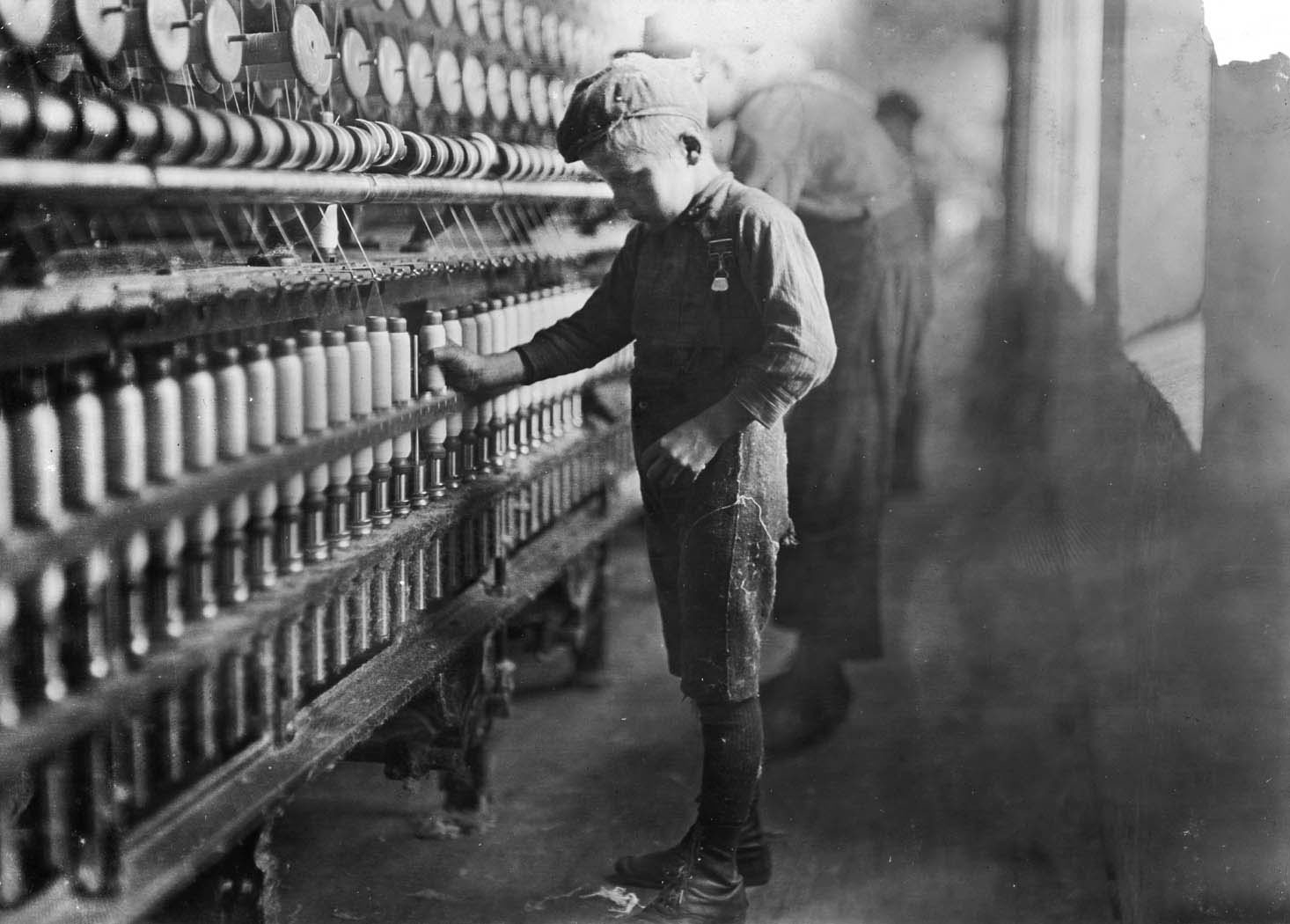
I saw someone mention that the ‘open-office’ paradigm looks a lot like a sweatshop or a factory, at least from the photos. Ignoring the vastly-different levels of pay and health concerns (carpal tunnel sucks, I’m sure, but losing a hand in a loom probably sucks more), we should give attention to the fact that it’s a repeating form. And it repeats for a reason: Capitalists require ever-increasing amounts of profits, and workers require ever-increasing amounts of escape from labor; factories concentrate labor in inescapable ways, and the presence of a foreman and the presence of a manager does the same thing to the worker, causing them to internalize discipline (the point of the panopticon).
Recognizing that form is crucial, because it then links the exploited (but high-waged) state of the tech-worker to the exploited (and low-waged) state of the textile-worker or the service worker. That is, they’re all workers, all subject to the same demands. As hard as it is for the low-waged worker to identify with the high-waged one, the high-waged employee is taught to distance themselves from the people who make less. Therein’s the death of class-consciousness, but also the seeds of its rebirth. When the engineer identifies with the factory worker as part of the same chain of exploitation, the Capitalist has no allies except the police and the government.
The same applies across ‘race.’ When white liberals finally identify their own state of exploitation with the far-worse conditions of descendents of slaves, those who profit from both groups will lose power.
I don’t know how to make that happen, though. That’s where privilege becomes a barrier. How does one get a white Amazon employee to not be a dick to the immigrant women cleaning his house and instead fight on her side?
Crisis, maybe. Or decades of education. And I fear we don’t have decades to educate people.
 Rhyd Wildermuth
Leave a reply to Anne Tagonist Cancel reply