The Persistence of Paganism

What’s really behind recent fears of a “pagan resurgence?”


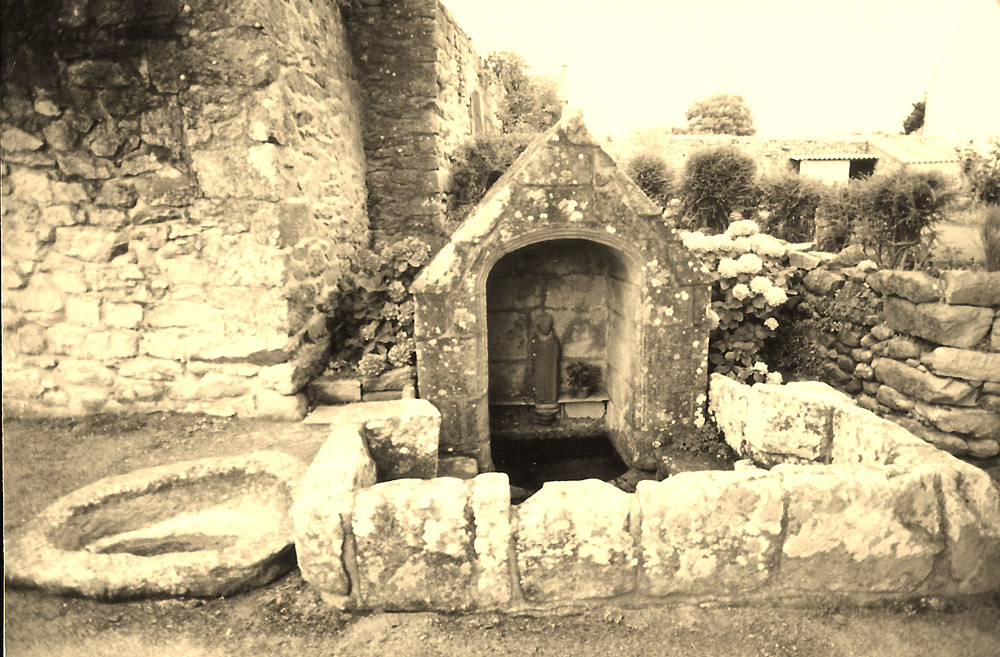
In the 6th century, the archbishop Martin of Braga — known as Saint Martin of Braga — wrote to a fellow archbishop regarding the ideal method for dealing with the persistence of pagan beliefs among Christians. His letter, “De correctione rusticorum,” (“on correcting the rurals”), first describes the creation of the world, then lists the many pagan practices local converts to Christianity had not yet eradicated. Martin’s list of demonic rural practices is quite intriguing, since he includes many things that people — including Christians — still do: lighting candles by holy fountains, decorating dinner tables, holding weddings on Fridays, and celebrating the beginning of the year on the first of January.

Martin of Braga’s letter, like many similar sermons and letters written by monks, missionaries, and bishops during the earliest parts of the middle ages, reveals a fascinating look into the struggle between an emerging Christian worldview and the older pagan practices and cosmologies that persisted throughout Europe. Such writing gives us glimpses of traditional European pre-Christian practices, even if sometimes the writers may have misunderstand what they were describing.

What’s particularly fascinating about De correctione rusticorum, however, is the title itself. Martin of Braga specifically wished to address and uproot the persistence of older pagan beliefs among the rūstica, “rural people.” They were people who had thus far not fully adopted the newer Christian beliefs of the more urban Christian leadership.

This association between rural people and paganism is not unusual, and the tension between rural and urban beliefs expressed in the letter predates Martin of Braga’s complaints. In fact, this tension is rooted in one of the original meanings of the word “pagan” itself.

In pre-Christian Rome, the term paganus referred initially to those who lived in the countryside, often outside the direct influence of the cultural and societal norms (the civitas) of Roman cities. This division was akin to modern tension between cities and the countryside. Consider, for example, the fashions, fads, and social norms of those living in sprawling urban centers such as London, Paris, or New York, versus those living in small villages in Britain, France, and the United States. Though we’d consider both groups in each situation part of the same nation, their ways of seeing the world and their values can often feel as if they are foreign to each other.

After Christianity became the official religion of Rome, pagan took on a negative connotation, becoming an insult. No longer did it only describe rural people, but it also came to describe the kinds of beliefs they held. After centuries of rarely appearing in writing, paganus became a common term — often meant as a slur, meaning something like “backwards” — for those who had not yet converted to Christianity. Something similar happened to a Germanic word often used as a synonym for pagan beliefs in the middle ages, “heathen.” Heathen originally meant literally “heath dweller,” those living on relatively difficult land far from the urban centers. They, like the pagans, were rural folks who had not been fully converted by the new, primarily urban, religious system.

It’s worth considering the kinds of lives such people would have lived in relationship to the urban centers and its fashions. Often dwelling in very small villages consisting of just a few families, they lived relatively self-sufficient lives, growing their own food, making their own clothes, building their own homes, and trading their “surplus production” (extra things they made or grew which they didn’t need themselves) with each other and with nearby villages.

This mode of living had, until capitalism, been the general default of human life for millennia. This is true whether we are describing ancient peoples on the European sub-continent or on any other continent, and it was also the primary mode of living of the indigenous peoples before European colonization in the Americas. So, though the words “pagan” and “heathen” were specific slurs designating peoples living this way in Europe during the ascendancy of Christianity, the life-ways those slurs described were much more widespread. This is why Catholic and Protestant missionaries and colonial forces to the Americas often described the people they encountered there with those same words.

Such peoples shared not just a similar material mode of living, but also a similar cosmological outlook. While the specific forms of those cosmologies differed, they were generally what later Western theorists summarized as “animist.” A key feature of animism is the belief that spirits exist and are intrinsic to parts or all of the natural world, and that being in relationship to those spirits is a crucial aspect of human life and survival. While what constitutes a spirit and what categories of spirits there are often differs greatly across animist cultures, the basic belief in their existence is the same.

Though this belief in spirits was widespread, the often stark differences between the names and types of spirits across particular animisms makes it incredibly difficult to codify animistic belief. This difficulty persists even among peoples who are geographically close to each other. For example, here in the Ardennes where I live, Celtic and Frankish peoples who lived in villages no more than 10 kilometers from each other focused their relational rituals on completely different gods and spirits, yet they were both equally animist.

The variations across such peoples, even living next to each other, is a crucial point to remember. Rural peoples cannot easily be categorized by the specific forms of their beliefs, their “religious” lives and cultural modes. Attempts to generalize across such peoples, to abstract or distill out the essence of their cosmologies into religious doctrine, will always leave us with nothing to work with. Rural (“pagan,” “heathen,” “animist,” “savage,” etc.) peoples and beliefs cannot be reduced, only compared and contrasted against another category.

That’s why, when the Roman Empire tried to codify the varying beliefs of the people it conquered and contained, it relied on the distinction between the civitas and the paganus, the urban and the rural. Urban beliefs, customs, and material modes of living became the standard against which all non-urban peoples were judged. The cities had formal temples and state-sanctioned priesthoods, while the rural had rudimentary shrines (often centered on sacred sites in nature) and informal priesthoods following a more shamanic method of initiation.

Think a bit like an empire for a moment, and you’ll start to see the breadth of the problem Rome encountered when trying to codify religious life. The Roman Empire consisted of multiple provinces and almost countless people groups, all governed from an imperial, urban center. Each of those people groups had their own gods and spirits, as well as their own methods of relating to them. Often those gods, spirits, and methods conflicted, leading to political strife, rebellions, and even all-out war when the Roman urban center tried to push its own fashions upon the people it ruled.

Rome’s solution to this problem was an effective one, at least for a little while. Rather than trying to force others to give up their own gods in favor of the Roman ones, it was much simpler to try to merge the gods. This process, called the Interpretatio Romana (“Roman translation”), involved finding similarities between foreign gods and the Roman ones, and then arguing that they were really the same god. Frequently, this just required the adoption of one name over another (Zeus to Jupiter, for instance). Another method was used primarily for the Celtic gods: the names of gods were strung together. Thus, here in the Ardennes, the Celtic goddess Arduinna and the Roman goddess Diana became Diana Arduinna, while in Celtic Gaul, Maponus and Apollo were merged into Apollo Maponus.

While this worked for larger people groups, not everyone had heard or even cared about these new translations. Though the Romans renamed Woden as Mercury, most Germanic peoples in the Roman Empire still kept calling him Woden. Much of this persistence had to do with the strength of their beliefs, but another important factor was that such peoples had only minimal contact with the Roman civitas, its influence, its pressures, or its fashions.

To understand the power of the Roman civitas, consider the influence that a city like New York, Paris, or Los Angeles has on the fashions, beliefs, tastes, and economic life of others. You may never have gone to Paris or even speak French, but you probably know what Chanel is or what the Eiffel Tower looks like. You might never go to New York City, but you’ve heard of the Yankees, Broadway, and Harlem. And L.A. might be the last place you’d ever consider visiting, but I’m guessing you’ve seen at least one Hollywood movie in your life.

Urban centers exert a powerful influence on the cultural forms of people around them. The way this happens in our modern age is primarily through broadcast and social media, but these methods only accelerate their influence. Even without them, the vast economic power of a city is enough to extend its influence far beyond its limits and to draw people into its orbit.

The Roman civitas exerted a strong gravitational pull on those outside of its geographical reach, both through its economic and its military strength. However, there were always people who were relatively immune to its influence, those who were generally self-sufficient and living in remote areas. Germanic peoples living in small villages and homesteads upon heaths, for example, or rural “pagans” who didn’t rely on the civitas for their livelihoods or trade often with the urban centers. Such people were also more likely to persist in their own beliefs, to keep to their own rituals to their own spirits and gods, and maybe never even to hear about the new religious interpretations declared in the cities.

Their situation didn’t change much when a heretical Jewish cult became the dominant fashion and official religion of the Roman Empire. Christianity was just one more urban fad that had nothing to do with their daily lives or the rich tapestries of their cosmologies, as relevant to them as the latest Kardashian drama might be to an “un-contacted” tribe in the Amazon Rainforest now.

This is the context for Martin of Braga’s De correctione rusticorum. Written in 575, just ninety-nine years after the fall of Rome, the Archbishop repeats a lament any pre-Christian Roman prelate would have immediately recognized. The rural people weren’t acting like the urban people, were still holding on to their old beliefs, and were either unaware of — or stubbornly ignoring — the latest theological fashions of the civitas.

Such a Roman prelate would have had another thing in common with Martin of Braga and the many other Christian leaders to follow him. As stated earlier, cultural and religious differences threatened the political stability of the Roman Empire, and this concern didn’t go away just because Rome did. Christian bishops and archbishops were not just theological leaders but also political leaders, and their interest in eradicating pagan beliefs among the “rustics” was part of a larger political project.

Christian readers might very much bristle at this suggestion, but they shouldn’t. Political power and religious power were not the separate interest spheres we think of them as today; it’s only a liberal democratic (secular Calvinist) conceit to believe religion and politics should or even can have nothing to do with each other. The Christianization of Europe only really began to occur in earnest after all the princes, kings, and other rulers were first converted to Christianity, and their conversions were only possible because of the political power Rome (the Pope) wielded over them.

Nor is this to say that these conversions, these concerns, or any of the beliefs involved were therefore inauthentic. The distinction between the political and the religious is a modern concept, and it’s a false one. It’s especially so because we have adopted a very narrow definition of what constitutes religious belief, associating it only with formal traditions and statements of faith. Religion is not just these, however, and to act otherwise is akin to an anthropologist discovering the skeleton of an ancient human and then concluding the world was once populated by skeletons.

More importantly: the cosmologies from which both religious and political beliefs derive cannot easily be codified into formal theological doctrines. For example, a person who believes there are only two human sexes is embedded in a different cosmology than someone who believes there are multiple genders and switching between them is possible. These are currently seen as political positions, but they are also matters of authentic (and differing) belief. To try to reduce these positions to merely political or merely religious and to then try to judge their authenticity is therefore impossible.

Martin of Braga was hardly original in his worries about the resistance of the rural peoples to the dominant political-theological order and the danger they presented to it. Nor was he hardly the last Christian leader to ink his concerns. In fact, such worries form a persistent type of literature which extends throughout the entire history of European (and later imperialist) Christianity. Oftentimes, extravagant and fantastical descriptions of pagan practices and beliefs — alongside exhortations to eradicate them — became a core theme of saintly literature, but these made their most dramatic appearances during the Reformation and the witch mania of the late middle ages. Everywhere there were dangerous pagan persistences, uneducated and unenlightened folks clinging to old ways and old rituals, and their existence undermined the security of the entire theological-political order.

Importantly, the Reformation versions of this narrative mark a shift in the geographical locations of these beliefs. Suddenly, the rustics were near or even in the urban centers, rather than on the far edges of the Christian civitas. With the exception of werewolf trials, whose accused were often rural and pastoral peoples (particularly men), the threat to Christian empire was most often now dwelling within cities, towns, and villages, not on the heaths or in other remote places.

However, though the actual location of the rustics shifted, their attributes and purported threat remained the same. This new pagan or heathen, called by any number of names, was no longer defined by where they lived, only by their resistance to the dominant political-theological order. They were all those who, even if nominally Christian, still clung to older modes of living and being in the world.

This is when we begin to see words such as “crass,” “rude,” “boorish,” and “impolite” become common words in English to describe uneducated or ignorant people. Each of those words is worth a little extra attention, since they can give us a sense of what shifted in the way we thought about each other. “Crass,” which now means someone who is un-mannered or who speaks offensively, once meant “thick” or “coarse,” referring to something that hadn’t yet been refined or whittled down. “Rude” is quite similar: it originally meant “unworked” or “rough,” like an uncut diamond or stone. “Boorish,” which now means “offensive or stupid,” was derived from an old French word that meant “cow herder,” and was originally a direct synonym for “rustic.” And the last word, “impolite,” is particularly informative. Its opposite, “polite,” derives from polis, which was the Greek equivalent of the Roman civitas. To be polite was to be in line with and to internalize all the concerns of the dominant order, while an “impolite” person did exactly the opposite.

A common theme in such descriptions is that there was something raw, unrefined, or unshaped about the person, which were all also qualities of rural life. The target of the insult hadn’t adopted the cultural norms and habits of urban life, and their behavior made this evident. It should then be no surprise that these synonyms for qualities associated with pagans, heathens, and rustics were used heavily in Protestant and Puritan literature during the birth of capitalism.

They also became common words the new urban class — the bourgeoisie — employed to describe the constantly rebellious lower classes. The political-theological order had changed again, but the concerns of this new class were the same ones shared by the witch hunters, by Martin of Braga, and by the Roman prelates before him. Some people kept holding on to old beliefs, old ways of being, and old ways of seeing the world; and by doing so, they threatened the stability of the dominant order.

This isn’t to say that the worry over actual rustics or actual pagans had gone away, though. Though the new type of capitalist urban centers spreading across the planet might seem quite different from the Roman civitas, the fear and disgust over the rustics outside them (called “hicks,” “white trash,” “rednecks,” and by other terms now in the US) is no different from the Roman and Christian condescending to the rustic. And up to the present, all the entire world outside the amorphous boundaries of Western Christendom was explicitly referred to as savage, primitive, barbaric, and even pagan by the intellectual, religious, cultural, and political leaders of Europe, the United Kingdom, Canada, and the United States.

This is how to make sense of the trend among intellectuals to warn about the threat of a resurgent paganism in our day. Paganism is returning, they declare in alarm, yet they seem to find their proof in places just as fantastical as the witch hunters did. In recent examples, such as an article in The Atlantic, we read of paganism being associated not with the simplicity or village life, but rather with the ostentatious wealth and power of figures like Elon Musk and Donald Trump. In other instances, writers conflate paganism with social justice identitarian (or “woke”) urban movements. Increasingly, we also read that newer transhumanist fantasies of a “godless, genderless, borderless, natureless world of all-seeing living machines” are also part of this resurgent paganism.

So, if “pagan” was once meant as a derogatory term for rural people whose ideas were out of touch with the dominant fashions of the cities, we now find ourselves in a situation where it’s often employed to indicate completely the opposite. Instead of simplicity, conservative social positions, and countryside life, paganism seems to mean for these writers all the excesses and quickly-shifting political fashions of urbanism.

Of course, there’s nothing new about this recent worry over a resurgent or persistent paganism threatening the stability of society. We’ve seen this concern so often throughout the history of both Christianity and Empire that it’s quite possibly an inherent feature of both. Still, it’s fair to ask why paganism seems to have become a large topic again, and why “pagan” seems to stand in for so many disparate and particularly urban ideas.

One reason this may be happening is because the term paganism lends itself quite easily to this usage: there’s very little agreement on what it actually means. Attempts to define what ancient pagans actually believed end up necessarily broad, and official definitions often include some reference to non-Christian beliefs. In other words, paganism is often defined in opposition to Christianity, a negative category into which to put all non-Christian ideas.

This problem of definition doesn’t just extend to ancient beliefs, either. Modern pagans (or perhaps more accurately, neo-pagans), rarely agree even on whether or not there are many gods, two god-principles, one goddess, or no gods at all. Some neo-pagans even embrace pantheism, an idea originating not with any indigenous or animist pre-Christian peoples, but rather introduced by the Dutch Jewish philosopher, Baruch Spinoza.

With so little clarity about what paganism actually means, and with so many differing — and often contradictory — ideas thought to be part of paganism, it shouldn’t surprise us that the term has also come to mean whatever a writer wants it to mean. However, it’s also absolutely worth asking if there are other terms that might better suit the critic’s purpose, and I suspect in many cases, there are.

Take, for example, the association of “woke” or social justice identitarian beliefs with paganism. Because many of these beliefs — and accompanying protests, including tearing down statues — involve a desire to cleanse society of its earlier racist, sexist, and colonialists roots, it’s perhaps more accurate to note its similarities to the Calvinist iconoclasm of the 16th and 17th centuries. The common social justice idea that white or male privilege is something that a person is born with — and can never truly be forgiven for — could just as easily be compared both to Catholic ideas of original sin or the Calvinist belief in the predestination of the elect.

Another area where “pagan” might be a less accurate term than others is in the matter of transhumanism. Believing that the body can be augmented, transcended, or even fully escaped seems to have much more in common with a rather persistent Christian heresy: gnosticism. Gnostics, including the Bogomils and the Cathars, believed that the physical or natural world — and especially the flesh and blood of the human body — was a kind of prison. Such beliefs certainly sound more similar to modern fantasies of uploading consciousness to computers than to pagan and animist beliefs about the sacredness of the natural world and all the beings within it.

And, especially in regards to attempts to identify the glorification of wealth and power as a “return” of paganism, we might also ask whether, again, Calvinist beliefs might be better suited as a potential source. It was, after all, the Calvinists who ended the long-standing prohibition against usury — the charging of interest — instituted by the Catholics. This prohibition was not just a financial one, but also a magical one, since, in the older theological understanding, only God could create “ex nihilo” (out of nothing).

If so many other potential explanations and historical precedents are readily available to use for these particular tendencies, why then blame such things on paganism? It might just be because moralists and leaders have been doing so for at least as long as Christianity has been around. Calling things you don’t like “pagan” certainly sounds a bit more serious than saying something is “diabolic,” “witchcraft,” or “satanic,” but the underlying accusation is there regardless. There are ancient and dark forces moving about the land, tempting people away from right belief, and especially urging them on towards behaviours that undermine and even directly threaten the stability of the political order.

When that order — call it civilization if you like — could perhaps justifiably be called Christian, then it made quite a bit of sense to identify those forces with paganism. Now, however, it’s difficult to argue there is anything approximating a Christian consensus in the West. Less than half (46.2%) of people in England and Wales identified as Christian in 2021, and those identifying as Christian in the United States declined from 90% in 1990 to 63% in 2022. So, though a “second religiousness” might be on the rise, it certainly doesn’t appear to be a second Christian religiousness.

And perhaps this gets us close to the core reason why so many writers seem concerned with a resurgence of paganism, and thus so ready to rename the actors in social strife “pagan.” For centuries, belief in a singular creator God functioned as a foundational belief throughout the West. The unified cosmology, shared mythic forms, and general moral structure of Christianity functioned at least as a common starting point, but this is less and less the case now.

This is what’s really behind these concerns: the dominant political-theological order appears to be breaking apart. The times that Christians and the Roman Empire worried most about the rustics, the witches, the heathens, the rude, and the pagans were when the order itself was fragile. This is seen most clearly in the witch mania of the 15th, 16th, and 17th centuries, a mania which Silvia Federici has convincingly shown was tied to the end of feudalism and the transition to capitalism. Political order was constantly unstable during that time, just as it also was when the Protestants and Puritans preached obedience and purity during the early industrial revolution, and when Martin of Braga wrote De correctione rusticorum as Christianity struggled to assert its dominance over peasants resistant to its urban fashions and taxation schemes.

And here its important to remember a point I made about the nature of animisms and pagan beliefs: they are not all the same, nor can they be easily codified into a coherent doctrine against which to fight. That’s why so many of these current laments pose a righteous but weakened “West” or “Civilization” or even “Democracy” against a falsely-unified “paganism.” Again, many — if not most — of these resurgent beliefs threatening the political-theological order are not even pagan at all. Much of the social justice identitarianism defined as “pagan” is much more accurately described as Calvinist, while the opulent pursuit of wealth and power called “pagan” by one critic hardly describes the average life-ways of indigenous and animist peoples throughout the world. And, though I have great admiration for Paul Kingsnorth, to describe transhumanism and its vision of a “natureless world of all-seeing living machines” as pagan is as inaccurate as one can possibly get, since I know of no ancient pagan or animist cosmology which posits that the natural world is something one can or should hope to transcend or escape. On the other hand, if we’re looking for a cosmology that does propose such a thing, that believes the natural world is mere “creation,” that for which the human body and its desires and drives are to be shunned or transcended, and that in which the physical existence of a human is inferior to its spiritual or mental existence, I think Christianity might be a great place to start such a search.

What is really happening is that the current political-theological order is receding, and there is no longer a single dominant narrative. For centuries, European and Anglo-American cultural and political narratives were so powerful that the rest of the world was drawn into their orbit, whether they wanted to be or not. There have many names for that dominance: hegemony, uni-polarity, the first world, democracy, Christendom, and Western Civilization. Regardless of what it was called, though, its power to shape the cosmologies of the people it ruled over is waning.

What’s replacing it isn’t paganism, but rather many, many different cosmologies. Certainly there’s an actual pagan resurgence, and much of my work has been to be among those who help usher this in. But pagans are far from the primary challenger to the current order, nor are formal religions also seen as threats by some, like Islam or Buddhism. Instead, the order is crumbling from within, unable to contain the heretical contradictions it has born into the world, while flailing desperately at the same specters that have always haunted it.

Recall again Martin of Braga’s list of rustic pagan practices threatening the Christian order in De correctione rusticorum. While some of those did eventually disappear, many others — lighting candles by holy fountains, decorating dinner tables, holding weddings on Fridays, and celebrating the beginning of the year on the first of January — are still practiced today. Martin of Braga — and others like him — never fully succeeded in their attempts to purge the old ways from the new. In fact, Christianity made a kind of peace, or at least a temporary truce, with many pagan practices, adopting them as their own. Candles are still lit at holy wells, prayers uttered in front of statues and images, and even sacred fires still lit on hilltops. Accepting those practices as something inherent in human relationships with the sacred, rather than evil beliefs to be eradicated, greatly enriched Christianity and led to its early stability. Thus, the resurgence of paganism is actually the persistence of paganism. It is hardly a thing to fear, but is instead a resilience from which to learn.

Tags:

Responses to “The Persistence of Paganism”

  1. Brian Roberts

    Uplifted by your work, as ever Rhyd. There is something oddly reassuring about the fact that the rural/urban dichotomy goes back so far and accounts for so much.

    And.

    I have to acknowledge that the dilution of the rural animist roots of terms like pagan and heathen makes me a little sad. Not surprising, I suppose. In this cultural moment it sounds like it is morphing into a signifier anytime you want to refer to the “unwelcome, unwashed ‘other’”. The bad ones. After years in the clutches of civitas I find I have much more in common now with my unwelcome and unwashed siblings than my urban techno-utopian friends. A reminder, perhaps, that the ‘other’ is relative and has more to do with the outstretched finger of condemnation than the particular faith or beliefs of the condemned. Thank you for your work, good sir.

    1. Rhyd Wildermuth

      The same thing has occurred for me as I grow older and also as I now live in the rural. I had absolutely adopted all the urban prejudices against rustic life-ways in my decades of living in cities, and I found myself confronted with all of that — and realising I’d been wrong — once I moved to this small village.

  2. Dan O’Neill

    I opted for the Druid path back in 2011 (living in London at the time and suffering its shadow dance of drudge and consumerism), and subsequently moved to the country. I did so to cultivate an actual relationship with place which I feel gives me a broader worldview than I had in the city. Urban ideas are constantly framed as the only ideas that matter – this is only because we, divorced from engagement with our specific environment, see what’s funnelled through screens and mistake them for reality. Paganism might be a resurgent method to get back some balance.

    1. Rhyd Wildermuth

      I definitely think so, yes. Of course, there’s the problem that much of what’s being called paganism by both its critics and also its adherents isn’t really anything pagan peoples actually did or believe. I’ve long been quite critical of many “neopagan” trends, though these are absolutely driven by irresponsible publishers and social media influencers, not organic belief.

  3. karen rom

    Even more than the content, your continuing focus on research and scholarship keeps you
    at the top of my reading activity. Hard to find this skill in presenting information to the ‘general’ reader in these times (well, any times). SO very appreciated. Be well.

    1. Rhyd Wildermuth

      Thanks so much! I often worry whether readers find essays like this too long or too academic, so I deeply appreciate hearing that they feel accessible to a wider readership.

      1. Shagbark

        Keep it coming, please! The historical context is so very important. It fills in much of the Story that is missing, ancestral threads, you might say. It is an essential element for connecting to the reality of who we are. A deep bow of gratitude to you, Rhyd!

      2. Rhyd Wildermuth

        Thank you!

  4. Nicholas.Wilkinson

    Reading this, I was thinking something again which I’d been thinking also in regards to this piece: https://seanfhocail.substack.com/p/brigid-beyond-belief (so I suppose I’d better comment there too). If you concentrate on rural / urban rather than on polytheist / monotheist, then how important is polytheist / monotheist anyway? At least with respect to these questions.
    I mean is it really ‘Christianity’ which has done any of these things that are blamed on it, or just urban systematizers doing what they (or we) have always done?
    There were authoritarian father figures in polytheist systems too – and still are – even those of small scale ‘animist’ societies. And there are plenty of Christians who are against emphasising – or even believing in – that aspect of the Christian God.

    1. Rhyd Wildermuth

      This really deserves a very long response, but I’ll try to tackle it with a shorter one. 🙂

      Martin of Braga’s letter is really interesting for this, because many of the rustica who he is denouncing had also adopted Christian beliefs in with their pre-existing pagan ones. This is akin to the situation in early Ireland that Sean is referring to, and is also what happened time and time again in Africa. Much to the consternation of missionaries, evangelists, and bishops, people would just “add” Jesus to their pantheon of gods and spirits, rather than deleting all the other ones and replacing them with him.

      This comes down to a core difference between polytheism and monotheism, something that Kadmus shows quite well in his book, True To Earth (https://abeautifulresistance.org/true-to-the-earth). Polytheism are additive, meaning they tend to just expand their cosmologies when encountering a “foreign” or “new” god to include it. Monotheism, starting with late Judaism and seen especially in Pauline Christianity and Augustine onward, renarrate the gods of others as “false” or “demons.” There can be only one, in otherwords, and that one is theirs.

      The point about late Judaism is important here. Jewish belief wasn’t always monotheist, but rather henotheist (acknowledging many gods but only worshipping one of them exclusively). Henotheism is quite common in Hinduism, too — selecting a favorite among the gods to devote oneself to.

      In Judaism, Henotheism switched to Monotheism around 800 BC, and it was brought about by a militant attempt to assert dominance over the rest of Palestine in order to form a national identity. That’s also the kind of mechanism of the urban over the rural.

      To your question, then, I think yes — the urbanizers or authoritarian figures have a lot of responsibility for this. But we also have to be clear that if the belief of any particular Christian is Monotheist (there is only one god and all others are false and evil), then they’ll tend towards authoritarianism also. There are absolutely Henotheist Christians (who wouldn’t use the label henotheist, of course) who don’t assert such a thing. The syncretic folk christianities of Central and South America would be one such sort. Of course, more dogmatic Christians don’t see what such people are doing as Christian at all, and, like Martin of Braga or like John Calvin, preach against and sometimes try to directly purge out the “pagan” parts of those beliefs.

      1. Shagbark

        “But we also have to be clear that if the belief of any particular Christian is Monotheist (there is only one god and all others are false and evil), then they’ll tend towards authoritarianism also.”

        Agreed. I have challenged Mr. Kingsnorth on this very issue, my argument being his monotheistic view is not at all dissimilar from The Machine and its various monocultures, its flattening of variety and diversity into the One Right Way. I don’t think he’s a fascist like many of his accusers do, but I can see why, in light of your assertion here regarding authoritarian tendencies in monotheists, why they might think so. I have to say, when I started reading your (fine) essay, he popped into my head, and I was unsurprised to see him referenced here. I don’t expect him to respond in the comments; I imagine him to be crafting a response via his own essay. (He follows you and has read it, to be sure.) We shall see. Looking forward to seeing how he will attempt to square this circle.

      2. Rhyd Wildermuth

        I think with religious beliefs, just like political and ideological beliefs (which are all essentially the same thing, cosmologies), it’s really crucial to keep in mind that these shift over time. What’s more, especially for formalized religions based on conversion, there is often an early period of zealotry that the believer isn’t necessarily aware of and usually grows past. It’s almost a necessary stage for conversionist religions, I think.

        Remembering that context helps take a longer view of certain drives. Recent converts tend to be far more dogmatic than people who’ve been in the religion for decades, and I’ve already noted a shift from his initial way of seeing these things to a maturing outlook. Give people time to bodily (as opposed to just mentally, which is the initial conversion experience) work through their beliefs and they usually come to the conclusion that the mysteries are far more complex and, well, mysterious, than they initially thought.

      3. Shagbark

        I agree. However, to my mind, conversion is a closing as it’s etymology shows us (i.e., a total reversal, a complete return or going back). Monotheisms demand this, and it is the exclusivity that I find so troublesome. I prefer widening circles (Nod to Joanna Macy) that include all the beings, seen and unseen, in my corner of the world. And, I have no problem including Christ or Woden into my relations.

        Henotheism is my word of the day😉

      4. Rhyd Wildermuth

        Etymology is really everything sometimes! 🙂

      5. Paul Kingsnorth

        Well, here I am, responding…

        I find this argument that something called ‘monotheism’ is more ‘authoritarian’ than something called ‘paganism’ to be deeply historically weird. Given that the great majority of the world’s authoritarian empires, from the Aztecs to the Romans, were ‘pagan’ – ie, polytheist – I don’t see how anyone can make it stand up, and I have never seen a convincing argument for it.

        As for ‘fascism’: er … the fascists glorified the ‘old gods’. The Nazis were knee-deep in occultism and blood-and-soil Woden worship, while Mussolini wanted to be the New Caesar. Place-based ‘indigenous’ gods, to my mind, are far more likely to lead to racial tyranny and human sacrifice than the church of Christ, terrible as that has sometimes been in its alliances with power. And they often do. Missing in the commentary here is the reason that so many people voluntarily moved to follow the church when it arrived: the sheer awfulness of the ‘old gods.’

        So I don’t see a circle to be squared. I see humans, everywhere and at all times, using religion and politics and tribalism as an excuse for their own depradations and desire for territorial expansion. The notion that ‘Christians’ or ‘monotheists’ are more responsible for that than Shinto practicioners or Native Americans is parochial, Eurocentric worldview that doesn’t hold up.

        Personally I think that all Christians should be repenting for many of the past actions of their church. But I also think that Christ and his way are the only path out of the human cycle of blood and revenge.

      6. Shagbark

        I was starting to craft my reply as I read your comment, but then I made it to the end and: “I also think that Christ and his way are the only path out of the human cycle of blood and revenge.” There is no room for further conversation, really, is there? Well done, you.

      7. Paul Kingsnorth

        Why not? That’s my thought. You might have others. Isn’t that what ‘conversation’ is? Or do we have to agree on everything?

      8. Shagbark

        Okay, I’ll play. No, we do not have to agree, but my disinclination goes a bit deeper than disagreement. The statement of yours that I quoted is a foreclosure which indicates that you will be less than likely to consider what I might have to say, and, if that is the case, there is little room for connection and relationship, even in this already truncated medium. Moreover, I live in Kentucky (“The Bible Belt”), and for my entire life I have been hammered, shamed, cajoled, and even sometimes politely invited to accept the exclusivity of your religious position. I am very open to, appreciative of, and even well-versed (Catholic education) in Christian perspectives, but not to the exclusion of other traditions. And, it is tedious to rehash the argument over and over again, thus my lack of enthusiasm to engage with you here. Plus, you already proved my point regarding exclusivity by stating it clearly in the quote.

        That said, I will respond. Firstly, I think you set up a straw man with “the great majority of the world’s authoritarian empires, from the Aztecs to the Romans, were ‘pagan’ – ie, polytheist”. That certainly does not include the vast majority of human beings going back 200,000 years who did not live in empires but who could be seen as pagan, although ‘animist’ would be more appropriate to my mind. I am not arguing that they were pure or nonviolent or any such romantic hogwash, but one would be hard pressed to say that they were more authoritarian than monotheists over the last 2000 years. Perhaps the disagreement here turns on the word ‘pagan’, and that could use some more fleshing out, but I disagree with your statement because it limits ‘pagan’ or animist practices to the last 3-4,000 years in order to prove your position.

        Secondly, regarding fascism: One cannot blame mythopoetics from several hundreds to thousands of years ago with the advent of Nazism/fascism. And, I did not assert that you or Christians are fascists. (I did once defend you against the accusation of being a fascist a writer at A Beautiful Resistance levied against you). And your statement “Place-based ‘indigenous’ gods, to my mind, are far more likely to lead to racial tyranny and human sacrifice than the church of Christ” is nothing but an unsourced opinion on your part that I assume to be colored by your own prejudice. Let the heretics burned at the stake be my witnesses.

        Lastly, the notion that the “sheer awfulness of the ‘old gods’” is the reason folks in Europe turned to the Church is sheer bunk. It was forced assimilation, and one must ignore the historical record of violence against traditional lifeways of local peoples in Europe by Christian forces to think otherwise.

        I do not think I will say anything more. I will read whatever response you might give, but I find conversations like this exhausting, so you can have the last say. Yes, I know, I made the initial comments. I find it (online discussion) to be a horrible trap that I mostly avoid (I am not on any other social media), but, believe it or not, I appreciate your work. That is, I appreciate what you did with Dark Mountain and the Vaccine Moment and other cultural criticisms, but you have lost me with your recent work, and maybe that is why I feel compelled to argue with you, why I created my own trap into which to step. I am disappointed, but that is my responsibility to hold, and I do not require anything from you. Thank you for the work you did which helped free me from the despair of Covid and the environmental movement. God bless you.

        Chris

      9. Paul Kingsnorth

        Well, that’s all fine. I won’t respond either. As you say, you did begin the conversation – or what I thought was a conversation – and I tried to respond in good faith. But yes, these comment section debates are always exhausting and rarely fruitful.

        I will say that, to my mind, your comment here does not respond to my words or thoughts but to a caricature of them, which seems to be coloured by your own experience of a certain kind of Christianity. Which I understand. But I can’t really argue for views I don’t hold. If you want to paint me a certain way it is going to be hard to get around that initial prejudice.

        We are all on a journey. All the best to you too.

      10. Nicholas.Wilkinson

        I’m thinking that, to muslims, Christians can seem polytheist because they believe in the Trinity and to Christians, muslims can seem henotheist, because they believe in djinn. Hindus can be as monotheist as Christians if they see all gods as aspects of the One. Neoplatonists were generally like that too, I think?
        So – yes – but I’m not sure. When you say ‘any individual Christian who believes this will tend…’ I kind of agree, but on the other hand what is this ‘tendency?’ It’s like ‘anyone who has a woodburner will tend to get lung cancer,’ a statistical truth applied at the individual level.
        I’m thinking of Martin Shaw’s recent post called ‘to know an unknown god’ – he talks about Paul in Athens saying he came to preach on behalf of the god they did not know until now. Someone in the comments popped up to warn Martin that he was forgetting the next thing Paul said: that worshipping other gods was no longer permissible, now that they’d been told of the one true God. I assume (though I’m not sure) that this person believes that is true Christianity – what Paul said – and Martin still has a lot of paganism to let go of. And there are plenty who think CS Lewis was too pagan, or so I’ve heard.
        I was able, for some time, to keep Christianity out of my life by agreeing with this. Now, not so much.

      11. Rhyd Wildermuth

        Yeah, so… I’ve actually seen a really strong push from the readers of both men to purge their Christianity of pagan remnants. I had to stop reading the comments on Kingsnorth’s essays because some of them were really quite frightening and frankly fanatical.

        Which is quite amusing, when you think of it, and is a bit why I focused on Martin of Braga here. I adore Kingsnorth’s holy well series, while at the very same time being very amused by the fact that veneration at wells was pre-Christian (pagan) practice that Christian authorities identified creeping into Christianity and tried to stop. Martin of Braga would have foamed at the mouth to read Kingsnorth speaking so beautifully and kindly of the practice!

        The specific bit in Acts is definitely interesting, because it’s the first time you really see the introduction of the idea that “before, God was tolerant of your ignorance and soon he will not be.” Currently reading Augustine (ugh) to get a clearer picture of exactly how the “other gods are demons” doctrine came about, since Paul had only begun to formulate this idea in his letters. The main thrust seems to have come after, though.

      12. Nicholas.Wilkinson

        I’ve got something like this with ‘immanentizing the Eschaton.’ Shouldn’t have given us an Eschaton to immanentize 🙂
        I’ve had times recently feeling like I’m no longer part of the proper crowd commenting on Martin Shaw’s posts – although admittedly that’s kind of a thing for me – but them I’m abandoning that space to the orthodox (small ‘o’) – just as an example.

      13. Rhyd Wildermuth

        Ah I know this feeling well. It happens both in leftist and dark mountain-adjacent (animism without the spirits) conversations for me because of my paganism.

        With the Christians, though, I tend to know the Bible and Christian history much better than they do, so I think they at least tolerate me for now. But of course, “even the devil quotes scripture…” 🤣

      14. Nicholas.Wilkinson

        So I have to say this – it’s a funny story (on some level) – I did the wilderness vigil with the West Country School of Myth. I was so scared on the way in and I remember one worry was that I’d come out Christian – because of this thing that happened to me in the forest in Vietnam. (I recounted that event… https://nicholaswilkinson.substack.com/p/praying-on-unstable-ground).
        Anyway I remember being scared that the School of Myth people wouldn’t like me any more, and I’d have to leave. They’d be all “no, sorry, we’re pagan, get out of here.” Those were my exact words, describing my anxiety, and I was reassured about it! But this was in the same wood and must have been roughly the same time that Martin had his vision. So…
        Is Dark Mountain animism without spirits? A lot of them seem pretty into what I’d have thought were spirits but maybe, as a whole, it’s agnostic?

      15. Rhyd Wildermuth

        I could see why you’d be worried you’d become a Christian after that experience (just read it now, thanks for the link).

        Maybe you already know this, but occultists often use psalms in their workings, just as in the middle ages magician texts urged readers to invoke certain Christian texts to summon demons or to heal the sick. This kind of practice goes back to the earliest days of Christianity, also: the Greek Magical Papyri are full of spells invoking Jesus and Hekate in the same ritual. This is also the core of the magical and religious structure in Haitian voodou and also in Santeria, both of which ported in Christian saints (Maman Brigitte is, well…this should be obvious).

        The “Lord’s Prayer” works quite well, even if you’re not a Christian, and especially in moments just as the one you were in. It’s the same with the Hail Mary prayer, which I used to use for things before I found more effective means. Say a heartfelt prayer invested with profound meaning by millions of others having also spoken it for centuries, and someone’s going to listen. Whether that someone is Jesus, Mary, or a really helpful spirit nearby is usually a matter of the cosmology one already is in, not of rational observation, and that’s okay.

        I think I spoke a little too flippantly about the matter of folks in the Dark Mountain orbit, so I should clarify. Having been outside the movement but often read by people within it, I was always perplexed by the very neutral talk of “the sacred” as kind of catch-all. I mentioned this to Dougald once, and I got the sense the neutrality is a bit of a cautious truce. I’m sure there are pagans and polytheists who are part of the movement (after all, John Michael Greer was published many times in their journals), but I suspect the Christian elements wouldn’t take too kindly to overt mentions of gods as anything other than dead metaphors.

        By “animism without spirits,” though, I’m more specifically referring to the kind of neo-animism of David Abram and others, in which the spirits and ancestors of other peoples are translated for a Western readership as more metaphors (as when Abram proclaims that the ancestors an indigenous group offers food to are really the ants that come and eat the food). This is a really widespread interpretation that has nothing to do with actually-existing animisms and is really just a version sufficiently sanitized to be palatable to secular minds.

      16. Nicholas.Wilkinson

        This is difficult to respond to because I have so much to say. I suppose the main thing to say was that, yes, I do and did know about this trend in magic (partly because of my wonderful friend Francis Young @alloldstrangethings), and there was also a more psychological explanation possible. But I had to work constantly to shut up any thoughts of this kind while actually on the mountain. A form of Pascal’s wager, I suppose. Also, I am just reading Thich Nhat Hanh’s book on prayer which seems to have a different, and intermediate, take again on prayer, as Christians see it, and magic as I think pagans see it.
        When I went out to Vietnam, I had been listening to people who encouraged me to see animist beliefs as ‘coded ecological knowledge.’ Worth remembering that that is in opposition to seeing them as ‘superstitious nonsense.’
        I wrote a whole load of posts reflecting back on what I learned about Katu spirit beliefs in the context of a conservation project, and also encountering anthropological ideas. I guess this is the most relevant piece: https://nicholaswilkinson.substack.com/p/nam-ong-paris-8-taking-sides – though not the best written, I’m afraid.
        Anyway, some Katu spirit beliefs could be seen as coded ecological knowledge (spirits of a place start getting tired of swidden farmers over the same timescale agricultural scientists would point to loss of soil fertility). That’s quite like David Abram’s ants. Other things less so. My anthropologist colleague thought that the most important thing to define an ‘abhuy’ – translated ‘spirit’ was not that it was invisible or immaterial, but that it was able to eat or ‘eat’ people. So ‘grandfather abhuy’ meant ‘tiger’. Most ‘abhuy’ were indeed ‘spirits’ but the definitions weren’t the same.
        So David Abram in ‘Ecology of Magic’ says “What if the ants themselves were the “household spirits” to whom the offerings were being made?” and what I like about that is the ‘What if.’
        And – weirdly – I hear the same ‘what if’ from Paul and Augustine – the men who, above all others, are associated with setting down ‘how things definitely are’ in Christianity. In Romans 9 – which I think is where Calvinism’s scariness finds its scriptural roots? – and in Augustine’s literal interpretation of Genesis. What struck me about these texts recently was the uncertainty.
        The first time I heard ‘Great Mystery’ used as – I assumed – a synonym for ‘God’ I thought it was incredibly New Age and corny, but it’s growing on me. Also growing on me are the perspectives of the “modern sort-of-Christians (like the CofE, for example [who] like to try and fudge what can’t be fudged,” that Paul K takes as swipe at below.
        If I’m out on the mountain again will I be saying ‘yes it’s all about accepting the incarnation and resurrection as historical events,’ and begging forgiveness for having the pride to think otherwise. Maybe.

      17. Paul Kingsnorth

        What I like about Orthodox Christianity is also the sense of ‘what if?’, to some degree at least. These days it sometimes makes me sad that in these often prejudiced debates around all the bad things Christianity is supposedly responsible for (bad things which other approaches to the world of spirit are often given a pass for) more is not known about the Orthodox approach. No reason it should be known of course – few of us in the West know much about eastern Christianity, myself included for most of my life. But it is very much more interior and attuned to the great mystery than the more rationalist path the church took in the West. Very much more understanding about the creator’s endless, ongoing animation of nature, too. Understanding the Orthodox approach has enabled me to entirely reconcile Christ and nature. More than that, to understand that they were never separate at all.

        Having said that, Christianity is not a ‘nature religion.’ Not in the sense that it teaches you how to relate to the mountain. But you don’t need it for that, because in your heart and spirit, you already know.

      18. Nicholas.Wilkinson

        Well, that last statement is either terrifying – necessitating extreme repentance from me – or it’s glib and annoying. Possibly both – I’ve been back and forth on the subject over Easter!
        An issue here – which I am not asking you or Rhyd or anyone to solve either way – is that it is difficult for me to trust you because I feel you have to say these things. I keep remembering Creationism, what people will believe because they have been told they have to if they are going to hang on to that pearl of great price. Orthodoxy may be less rationalist, more interior, but it still does seem to involve signing up to quite a lot of workshopped statements by councils of bishops for all that.
        …so I have those thoughts in the background -really just FYI.
        As far as I can see, how to relate to the mountain is at the very least as much of a mystery as how to relate to my fellow human beings and Christianity does have rather a lot to say about that – formally and informally.

      19. Paul Kingsnorth

        Well, in terms of what I ‘have’ to say, I’d put it a bit differently. On the one hand, I don’t ‘have’ to say, or believe, anything. I am currently on Lent, for instance, and the Church has a pretty strict fasting and prayer regime. Why? Because it’s part of the spiritual path it teaches. It’s designed to knock away our ego bit by bit, and focus our minds and hearts on God rather than ourselves. But nobody can make me stick to it. If I give up on praying, take up the steak and booze and don’t bother going to church on Sunday, my priest isn’t going to come round with a stick.

        I’ve chosen to, as we say in the Orthodox world, ‘put myself under obedience’ specifically because I want to follow a tradition. I felt the same (and did the same) when I was a Zen Buddhist. I see it like this: we have here a tradition which is 2000 years old (2500 in the case of Buddhism.) Over that time, a lineaged spiritual path has been practiced, tested and handed down by a lot of people – saints, boddhisatvas, elders, etc – who had mastered it. Now, here is little old me in 2024. I am visited by Christ (repeatedly) and decide I need to follow him. What do I do?

        Well, I could try to do it all on my own – and I did for a while. But in the end, surely the thing to do is to insert yourself into the tradition. How can I know better than these people? It’s been tried and tested, after all. It is designed to make you what God wants you to be. You won’t like all of it – of course you won’t, because it is designed to break your ego and make you into another shape. Some things you are taught you won’t like at all. Because the world, and God, are so mysterious, e might not even understand what is asked of us (see: the book of Job!) But if everything about your spiritual path makes you comfortable, then it isn’t changing you at all. And I want to be changed.

        So that’s how I feel about it. Nobody makes me do or say anything. But I choose to make myself part of a greater thing; a collective of people following an old path which is hard, and sometimes rickety, and always straight and narrow. I choose to accept the teachings. I want to see where they will take me. Sometimes I might not like a priest or bishop, and often I won’t like what ‘Christians’ have done with that path in the past. But I choose to follow it. I do believe that, at root, it contains the truth.

        And what else is there? For me, anyway, I feel like every other path I pursued came to a dead end. And I found myself here, very strangely. It felt like a rescue.

      20. Nicholas.Wilkinson

        And what’s an argument in the comments section compared to that?
        The priest coming round with a stick has been a thing, of course, and I don’t think anyone here thinks that was a great idea. Though I suspect some people in your own comments section do! Even the glib way I am talking about this, is going to leave some people fuming, maybe burning inside.
        Is Rhyd right that what you are cleaving to is, by its nature, supporting sticks in the hands of priests down the line. I have to say that it does sound plausible. I’m not going further than ‘plausible.’
        Your practice is stronger than mine, your spirituality is, I think, stronger than mine (if that makes any sense – it doesn’t really) and I think you deserve respect for taking difficult paths, for following what you believe to be the right thing to do and even more for admitting you need rescue.
        But I know that you yourself are saying the same sorts of things about other people and also saying that you believe they are wrong. You have to deal with that if you follow any path that involves accepting anything about the nature of reality.
        There’s a practice in Tibetan Buddhism where you contemplate that, as all have been reincarnated over beginningless time, any being you interact with was once your beloved mother. How could such an exercise fail to make one a better person? But I cannot believe in reincarnation over beginningless time in order to practice like this. I just can’t.
        So when I say I feel you ‘have to’ say something, I only mean you have to say it if… Even if the priest has a stick, you don’t simply have to say anything full-stop, you just have to say it if you want to avoid getting hit with a stick. I may misunderstand, but it seems to me you are saying ‘you have to accept these truths as part of a defined package, otherwise you will be left out in the darkness (probably – God is merciful, but probably).’
        There is a big difference between, ‘you can’t just pick and choose what you like’ and ‘you have to accept this whole package.’ The idea that Christianity is the package – or even that the package is an essential component of Christianity – is my best justification for rejecting Christianity. And, at the end of the day, the people who assembled the package were just people. And it might be that some errors are subtle enough, or precious enough, that they take centuries to be corrected and cannot be corrected by humans alone.

      21. Paul Kingsnorth

        Well, I suppose I could say a lot in response but it is possible to say too much. Especially about the thing that is ultimately unknowable.

        You can overthink this. I think you are doing that here. Of course, you can underthink things too. I can only speak for myself. I prayed, at what felt like the end of the line, to be shown what the truth looked like, and I was shown Christ. Repeatedly. So I had to try and do something about that. The alternative was to spend the rest of my life analysing everything to death and committing to nothing, which is what I had been doing up to that point.

        At some point, you’re right, there is a truth claim involved. ‘This is right and so this can’t be.’ Of course Christianity will involve this. But so will Rhyd’s paganism: one of the things he thinks is wrong is … Christianity. Unless we are going to be all uber-post-modern and claim that nothing is real and so everything is true, then at some point we have to start swimming in our chosen waters.

        Priests with sticks? Priests have never had sticks. As for being left out in the darkness. Well, what happens after this life ends is impossible to say. I believe in a creator – a ‘Father’ – and I believe in a judgement for how we live our lives. But I don’t make the judgement, and neither does the priest with the stick. All I come down to is this: I have found a path which, for all its myriad flaws, I believe is cored around the truth. So I am going to follow it. That will be quite enough work for one lifetime, without judging what others do. This, by the way, is pure Orthodox teaching.

        So that’s all I have! I don’t believe religion is anything other than a flawed human creation which can often lead to tyranny, and Christianity is no exception. But it’s all about Christ, in the end. Everything else is fluff.

      22. Nicholas.Wilkinson

        Never been accused of overthinking before 🙂
        I should stop before I think anything else! It’s too late already, of course.
        I mean, if it’s all about Christ in the end, and everything else is fluff and if, as you point out, Rhyd isn’t talking about Christ at all, then everything Rhyd is objecting to in Christianity is fluff. That possibility is kind of where this thread started anyway.
        But I’d better stop, right? If I say anything else on this thread it will be a vague affirmation and I won’t mean it sarcastically.

      23. Paul Kingsnorth

        Speaking as someone who has made a career out of overthinking, I can testify to its addictive nature …

        In terms of the fluff: we can argue about how many angels can dance on the head of a pin or who precisely is a heretic, and there have been plenty such arguments over time. We can also argue about all the terrible things that the Church has justified, of which there have been plenty too. But the only reason to be Christian is because you want to follow Christ. If he is who we think he is, then there’s no other option, really. I imagine he’ll be swift to judge those who were only Christian on the outside, or who bent his teachings to the wrong ends.

        Which of course might include me. More prayer needed!

        Never be afraid of vague affirmation 😉

      24. Nicholas.Wilkinson

        Well personally I’m thankful that you took the time to respond. Keep it real!

      25. Paul Kingsnorth

        On Dark Mountain, just for my perspective: overwhelmingly when I was involved, the vibe was very much a kind of ‘vague paganism.’ This is broadly the vibe of the British green-left. A few Christians, but they are not likely to be traditional church members. The phrase ‘the sacred’, which I was very much guilty of using myself, was basically a way of talking about God without making any commitments or offending anyone. This meant in the end, as you say, that there was no actual path or commitment, and everything ends up mushy and inoffensive.

        Charitably, and this certainly applied to me, it is perhaps a phrase people use when they are on a journey and are not sure where it leads yet.

  5. BeardTree

    Can’t remember if I have posted this C.S. Lewis quote “They err who say ‘The world is turning pagan again” Would that it were! The truth is, we are falling into a much worse state.” Lewis after this quote or along the same lines elsewhere writes about the beauties, goodness, glories, greatness of aspects of Greek/Roman and Nordic “pagan” rituals, practices, ethics, morality.

    1. Rhyd Wildermuth

      I adore this quote! I’ve not yet found where it is from. Do you happen to know?

      1. BeardTree

        Here “One of the lesser known and lesser read works of CS Lewis is his correspondence with Rev. Fr. Don Giovanni Calabria. Few indeed have read them since they were written in Latin. And though an English translation was published in 1998, I know few who have ever heard of these letters. The full collection of these letter is here: The Latin Letters of CS Lewis”

      2. Rhyd Wildermuth

        Ooooh thank you!!!!

      3. BeardTree

        Also “Christians and Pagans had much more in common with each other than either has with a post-Christian. The gap between those who worship different gods is not so wide as that between those who worship and those who do not”

        And “That is why I often find myself at such cross-purposes with the modern world: I have been a converted Pagan living among apostate Puritans.”

        I couldn’t find the quote where he does an extended riff on the beauties and goodness of a pagan society at its best in action as if you were there living in it. With his classical education he had deep understanding of the Nordic and Greek/Roman paganisms. He also had an understanding of the magical world of medieval Christianity. He put aspects of all this into his Space Trilogy. You could even say he portrayed a animistic version of Christianity in that work, especially the last volume.

  6. BeardTree

    Here it is – a poem written by C.S. Lewis on the glories of paganism. The title “Cliche Came Out of Its Cage” Enjoy.

    You said ‘The world is going back to Paganism’.
    Oh bright Vision! I saw our dynasty in the bar of the House
    Spill from their tumblers a libation to the Erinyes,
    And Leavis with Lord Russell wreathed in flowers, heralded with flutes,
    Leading white bulls to the cathedral of the solemn Muses
    To pay where due the glory of their latest theorem.
    Hestia’s fire in every flat, rekindled, burned before
    The Lardergods. Unmarried daughters with obedient hands
    Tended it. By the hearth the white-armd venerable mother
    Domum servabat, lanam faciebat. At the hour
    Of sacrifice their brothers came, silent, corrected, grave
    Before their elders; on their downy cheeks easily the blush
    Arose (it is the mark of freemen’s children) as they trooped,
    Gleaming with oil, demurely home from the palaestra or the dance.
    Walk carefully, do not wake the envy of the happy gods,
    Shun Hubris. The middle of the road, the middle sort of men,
    Are best. Aidos surpasses gold. Reverence for the aged
    Is wholesome as seasonable rain, and for a man to die
    Defending the city in battle is a harmonious thing.
    Thus with magistral hand the Puritan Sophrosune
    Cooled and schooled and tempered our uneasy motions;
    Heathendom came again, the circumspection and the holy fears …
    You said it. Did you mean it? Oh inordinate liar, stop.

    2

    Or did you mean another kind of heathenry?
    Think, then, that under heaven-roof the little disc of the earth,
    Fortified Midgard, lies encircled by the ravening Worm.
    Over its icy bastions faces of giant and troll
    Look in, ready to invade it. The Wolf, admittedly, is bound;
    But the bond wil1 break, the Beast run free. The weary gods,
    Scarred with old wounds the one-eyed Odin, Tyr who has lost a hand,
    Will limp to their stations for the Last defence. Make it your hope
    To be counted worthy on that day to stand beside them;
    For the end of man is to partake of their defeat and die
    His second, final death in good company. The stupid, strong
    Unteachable monsters are certain to be victorious at last,
    And every man of decent blood is on the losing side.
    Take as your model the tall women with yellow hair in plaits
    Who walked back into burning houses to die with men,
    Or him who as the death spear entered into his vitals
    Made critical comments on its workmanship and aim.
    Are these the Pagans you spoke of? Know your betters and crouch, dogs;
    You that have Vichy water in your veins and worship the event
    Your goddess History (whom your fathers called the strumpet Fortune).”

  7. Paul Kingsnorth

    Thanks for this. I take your criticism and I think you are right. ‘Silicon gnosticism’ wold have been a better description of what I was trying to get at than ‘silicon paganism.’

    I think there are some deeper things to dig into here as well though. Not in a comment but maybe somewhere else. My view is that the spiritual void opened up by the collapse of Western Christianity is being filled with a lot of different things. That silicon gnosticism seems to be the worldview of choice of the ruling class. It is, though, also being filled by an actual returning paganism, with a lot of ideas about ‘old gods’ and with an obvious resurgence of the occult. Another monotheism – Islam – is also rushing in to fill the void, especially in Europe.

    Something else worth discussing is that your work on Christianity is focused a lot on the Reformation variant, and then sometimes also (as here) on what the Roman church did before that. But by the time the Roman church began its work on the West, the church as a whole had already split in two, with the eastern (‘Orthodox’) world cleaving much closer to the inner tradition of the early Christians. There’s a whole Christian world that that Western people know very little about. To me it has been hugely revealing.

    I personally would like to hear how you – a self-described pagan – actually define paganism. Myself, I would probably point to a worship of the immanent over the transcendent. But the issue is also the Father versus the ‘gods.’ Those ‘spirits’ that you talk of, that I also used to follow and worship and all the rest: to a Christian they really are to be avoided. Not just to a Christian, either. My wife is a Sikh and the teaching there is the same. It isn’t just Christians who think that ‘the gods of the nations are demons.’ This really is the big division, rather than that of rural vs urban. After all, it’s Christianity which is becoming, ironically, the religion of the rural hicks in the West today.

    What I find interesting – and I see it in the comments here too – is that there is a broad sidestepping in this conversation of the heart of Christianity: Christ. He is the only reason to become a ‘Christian.’ And ‘Christianity’ is not in fact a philosophy – or indeed a political movement, no matter what the Roman church may have tried on. It is what its early followers, and Christ Himself, described it as – a ‘way.’ If Christ is who he said he was, he is the centre of history. If he wasn’t, he was just the leader of a now-fading cult which is only of historical interest. To me, this is the only thing that matters. The rest is just fluff.

    1. Rhyd Wildermuth

      I definitely think “Silicon gnosticism” is a great word for it, and I also consider it as much a threat to pagan ways of being as you see it to Christian ways of being (and, really, a threat to the world and to all the humans and non-human things in it as well).

      And yes, I do think lots of things are rushing into the void, because voids have a tendency of wanting to be filled. Islam in Europe is one of those cosmological systems, while Rodnovery (slavic paganism) is actually taking quite a bit of a hold in eastern Europe. I’m also suspecting that we’ll start seeing a huge burst of American evangelical Christian missionaries arriving in Europe also (as they did in the former soviet union, much to the consternation of the Russian Orthodox church), and I’ve seen a lot more Mormon missionaries here than I ever did before.

      To the last question — I think I sent you the book I wrote on this, Being Pagan? I’d have to kindly reject your proposed definition because the words “worship,” “immanent,” and “transcendent” are all embedded in the Christian cosmology. I’d switch out “worship” for “revere” or at least go back to worship’s oldest meanings (see this and follow the reference to “worth” to see what I mean: https://www.etymonline.com/word/worship ). Also, “immanent” and “transcendent” don’t really apply since paganism(s) don’t have a sense of anything being outside the world.

      But a shorter-than-book-length definition of paganism would be “European animism, characterized by reverence for and relationship to multiple gods and spirits of nature, with rituals often focused on sacred natural sites such as groves, trees, fountains, caves and often specific seasonal or agrarian events.” And no, this doesn’t really fit in with what Wicca or other neo-pagan groups assert. 🙂

      1. Paul Kingsnorth

        Yes, and I will properly read that book before we speak, if we do.

        When I was a Wiccan, my coven’s ‘high priestess’ always insisted that Wicca was not neo-pagan. She didn’t like the neo-pagan movement either. I think she would have agreed with your definition here though – that’s certainly what I thought I was getting into, and doing.

        Perhaps then, these sense of there being ‘nothing outside the world’ is really the dividing line. Even when I was at my most pagan, I never believed – or felt – that. And that is one way in which the modern world is ‘pagan’ in a limited sense. It accepts nothing but the world. It just strips out the gods and puts us in their place.

      2. Rhyd Wildermuth

        John Michael Greer has written a lot about this last bit, as the problem with associating the secularist-atheist trend we see now with paganism is that paganism wasn’t atheist at all.

        There’s a really good case to be made (and Greer cites several religion scholars making this case in his book A World Full of Gods) that atheism is actually another offspring of Christianity, since the very same tools Christian theologians employed to defend the singular nature of the Christian god were what were then used by the early atheists. A way of putting this (Edward Butler made this point, I think), is that once you start whittling down the gods from “many” to just “one,” it’s a quick step to “none.”

      3. Paul Kingsnorth

        That’s an interesting thought. Though I will always come back to the pesky ‘what is true?’ question. It’s obvious enough why this is so vital to a Christian. Either the incarnation and the resurrection happened, or they didn’t. A lot of modern sort-of-Christians (like the CofE, for example ;-)) like to try and fudge this but it can’t be fudged, because it’s about the nature of reality. It’s what makes Christianity so weird and unique and often hard to swallow.

        I think modern atheism is probably an offspring of Western Christianity. Maybe an unintentional consequence of the Roman Church’s magisterium, in which every tiny detail of the faith must be codified. I think that once you start trying to rationalise or explain God – beyond a certain point – you are doomed. Of course pagans weren’t ‘atheist’. But if there is ‘nothing beyond the world’ then where did all these ‘gods’ come from? Are they a consequence of the world being, in essence, a living thing (which I still believe)? Then where did life come from? And how? If nowhere and for no reason is the answer, then you end up back here.

      4. Rhyd Wildermuth

        You know what’s really weird? When I was a Christian, I thought a whole lot about the creation story and the origin of life and that felt really important. Oddly, when I stopped being a Christian, the question of where everything came from also completely disappeared. So when you asked that, I found myself suddenly confused as to why that ever felt like an important thing to me and why, for the last 20 years or so, it stopped being important at all.

        I think it all comes down to cosmologies. If one worships or venerates a creator god, then the creation of the world is an important matter (especially if that creator god is also the only god!). Just as how salvation isn’t a relevant point in other formal religions because they don’t have a savior-god and don’t believe there’s anything humans need to be saved from.

        Lots of paganisms (again, plural here) have origin stories involving beings who died in the process of creation (as with women in childbirth). Others don’t have any at all, as if it’s not a question they expect religion to have any answers for. And for some, the creation story is crucial because it’s an ongoing process influenced by a specific god or group of gods. For me? It’s really not something I ever think about anymore.

      5. Paul Kingsnorth

        It is certainly the case that different cosmologies change the individual worldview. I was shocked by how my relationship to nature changed when I became a Christian, for example. This wasn’t an intellectual stance: I didn’t decide to see things differently because the church said I had to. It just all changed. So I can perhaps see what you mean.

        To me of course it’s not just about where things came from but where we are going. These are the two great questions of human existence. I can’t imagine ever not being haunted by them. Who are we, why are we here? What is the nature of things? Paganism never answered these questions for me. Maybe it is not designed to.

      6. Rhyd Wildermuth

        I’m reminded of something about written vs oral traditions that others have described in better detail than I could. Cultures that prioritize written language over spoken tend to have very sharp distinctions between present, past, and future, while oral-prioritized cultures tend to focus on the present.

        This seems self-evident, as all written language immediately becomes a relic of the past the moment it is written, something that can be examined again even if its author is long dead. On the other hand, the spoken word only lives in the present, so cannot be examined (or dissected) except by those hearing it in the moment.

        As the monotheisms are often called ‘people of the book,’ and as most animist and pagan cultures are oral, there may be some relevance here on the question of creation, past, and future.

        Also, another difference is that oral cultures tend to use more in-process verbs while written cultures tend to use more static ones and also use many more nouns. This is relevant to the urban vs rural problem — consider the English complaint about rural Africans or indigenous Americans having “no concept of time.” They do, of course, but their languages prioritize in-process time, not static time, and so concepts like “now” and “later” have completely different meanings for them than they do for an urban (or really any) English-speaker.

  8. Caitlín Matthews

    Hail Arduinna! A lovely piece of writing indeed. At our time of living, all the foregoing traditions are part of our ancestry and so we can rejoice in what works and seek solace and help where we need. As a dedicated animist, I just love this.

  9. BeardTree

    From the Encyclopedia Britannica. People rattle on about the Mother Goddess being the bomb in the past and dominant and that her religion should be revived. But as always reality is a messy complicated weave.
    “High God, in anthropology and the history of religion, a type of supreme deity found among many nonliterate peoples of North and South America, Africa, northern Asia, and Australia. The adjective high is primarily a locative term: a High God is conceived as being utterly transcendent, removed from the world that he created. A High God is high in the sense that he lives in or is identified with the sky—hence, the alternative name. Among North American Indians and Central and South Africans, thunder is thought to be the voice of the High God. In Siberia the sun and moon are considered the High God’s eyes. He is connected with food and heaven among American Indians.

    Though the pattern varies from people to people, the High God usually is conceived as masculine or sexless. He is thought to be the sole creator of heaven and earth. Although he is omnipotent and omniscient, he is thought to have withdrawn from his creation and therefore to be inaccessible to prayer or sacrifice. Generally, no graphic images of him exist, nor does he receive cult worship or appear in the mythology. If he is invoked, it is only in times of extreme distress, but there is no guarantee that he will hear or respond. His name often is revealed only to initiates, and to speak his name aloud is thought to invite disaster or death; his most frequent title is Father. In some traditions he is conceived to be a transcendent principle of divine order; in others he is pictured as senile or impotent and replaced by a set of more active and involved deities; and in still other traditions he has become so remote that he is all but forgotten.”
    Any High God revival going on in paganism? Or have the Abrahamic religions cornered that market? From my perspective Jesus made the Father or the High God if you like, accessible to me.

  10. Nathan Alexander Ross

    Mic Drop

  11. Fukitol

    I don’t think I’d be so quick to point the finger at Christianity for the neo-gnosticism that is transhumanism. If anything it’s the other way around, Christianity being a syncretic amalgam of Judaism and various mystery cults. Gnostics, Hermetics, and other occult religious systems propagated within the framework of Christianity, and sometimes claimed to be compatible with it, but mainstream Christianity disavowed them in substance even where it incorporated some of their ideas. Christians might throw this all under the umbrella of witchcraft and paganism as “non-Christian” but I don’t think “no u” is the right response.

Leave a reply to BeardTree Cancel reply